Skincare Routine While Travelling: The Complete Guide to Glowing Skin No Matter Where You Go


Sunscreen Spray for Body | SPF 50+ PA+++ | Sweat & Water-Resistant | Broad Spectrum UVA/UVB Protection | Clear Matte Formula | Aloe Vera | 100ml
You come home from a trip looking tired in a way that goes beyond jet lag or long drives. Your skin is dull, dehydrated, possibly broken out in places it never usually breaks out, and somehow simultaneously dry and oily in a combination your face never produces at home. You've eaten differently, slept in different beds, been exposed to different water, different climate, different air quality — and your skin has registered every single change.
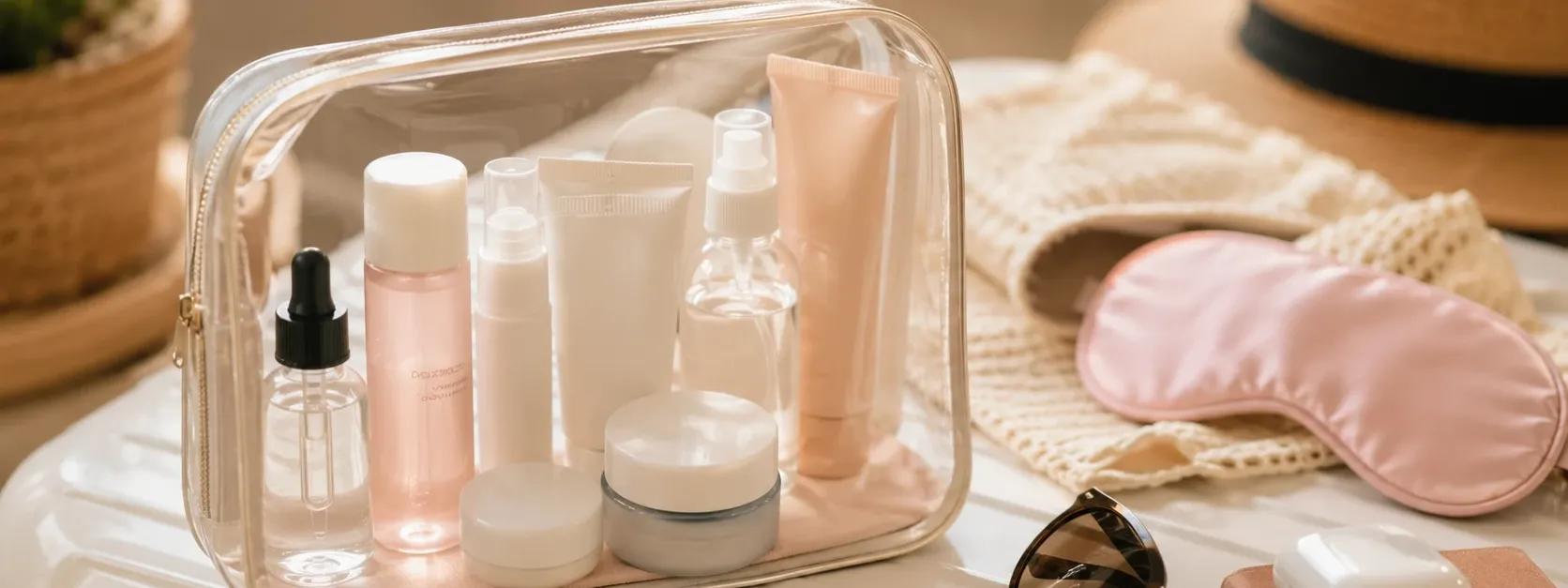
Maintaining a skincare routine while travelling is one of the most consistently underestimated aspects of travel preparation. Most people either abandon their routine entirely — relying on whatever hotel provides — or attempt to bring their full bathroom cabinet and collapse under the weight of it. The sustainable middle ground is a streamlined, travel-adapted skincare routine that addresses the specific stressors travel puts on your skin without requiring a checked bag full of products.
Understanding why travel disrupts skin is where building the right routine starts.
Air travel and dehydration
Airplane cabin air is extraordinarily dry — humidity levels typically sit at ten to twenty percent, compared to the forty to sixty percent that skin is comfortable at. This low humidity pulls moisture from your skin continuously throughout a flight, leaving it dehydrated, tight, and more prone to sensitivity and breakouts after landing. A four-hour domestic flight produces measurable skin dehydration. A ten to twelve-hour international flight can leave skin significantly compromised for twenty-four to forty-eight hours post-landing.
Climate changes
Moving from Mumbai's humidity to Ladakh's cold, dry altitude, or from Delhi's winter air to Goa's coastal heat, forces your skin to adapt rapidly to conditions that differ dramatically from what it's calibrated to at home. Products that work perfectly in your home climate may perform differently — your regular moisturiser may feel insufficient in a cold, dry hill station or uncomfortably heavy in a humid coastal destination.
Water quality variations
The mineral content and chlorine levels of water vary significantly across Indian cities and international destinations. Hard water — high in calcium and magnesium — can leave a film on skin that clogs pores and disrupts the skin's pH. High chlorine content in treated water dries skin and strips natural oils. Travellers who rely heavily on tap water for cleansing often notice skin changes that are more about water quality than product changes.

Rapid Dark Spot Correction Set | Reduces Dark Spots & Post-Acne Marks | Cleanser, Gel, Moisturizer & Sunscreen Kit
Disrupted routine and sleep
Irregular sleep during travel — early morning flights, late arrivals, time zone changes — elevates cortisol, which triggers inflammation and can worsen conditions including acne and rosacea. Missing the consistent morning and evening routine that keeps skin balanced at home allows products to be applied irregularly and in the wrong order.
The principle behind an effective travel skincare routine is radical simplification without sacrificing the steps that actually matter. Identify the three to five products that are genuinely doing the work in your at-home routine — and take only those.
Step 1: Gentle cleanser
A gentle, low-foam cleanser is the most important travel skincare product you can carry. Harsh cleansers compound the dehydration that travel already causes. Look for cream or gel cleansers without sulphates — Cetaphil, Minimalist, Simple, and Bioderma all offer travel-friendly gentle cleansers in formats suitable for Indian skin. If you wear sunscreen and makeup, micellar water on a cotton pad as a first cleanse followed by a gentle face wash covers double cleansing in a compact, travel-appropriate format.
Step 2: Hydrating toner or essence
A hydrating toner — one focused on moisture rather than exfoliation — is particularly valuable during travel to combat the dehydration effects of air travel and climate changes. A small spray bottle of hydrating toner doubles as a mid-flight facial mist, providing immediate relief to dry cabin air skin. Korean beauty brand Pyunkang Yul, Laneige, and Indian brands including Plum and Minimalist all offer hydrating toners in travel-friendly formats.
Step 3: Moisturiser — and possibly a facial oil
Your regular moisturiser in travel size is the cornerstone of your travel skincare routine. For travel to dry or cold destinations — hill stations, air-conditioned environments, long flights — adding a few drops of facial oil over your moisturiser provides an additional barrier against moisture loss. A small 10ml bottle of rosehip, marula, or squalane oil takes up negligible bag space and provides significant additional protection against dehydration.

Face Wash for Dark Spots & Marks | Alpha Arbutin + Kojic Acid | Evens Skin Tone | Non-Stripping Gentle Formula | For All Skin Types | 100ml
Step 4: Sunscreen — non-negotiable everywhere
Sunscreen is the travel skincare product most often skipped and most consistently needed. UV exposure at high altitudes is significantly more intense than at sea level — the UV index in Ladakh or Himachal at 3,000+ metres is dangerously high even on overcast days. Beach destinations require broad-spectrum protection reapplied every two hours. Even urban travel involves more sun exposure than a typical day at home or in an office. A travel-size sunscreen of SPF 30 minimum, SPF 50 for high-altitude and beach destinations, is not optional in any travel skincare routine.
The airplane is the most skin-hostile environment most travellers encounter — which makes in-flight skincare the highest-impact application of your travel routine.
Before boarding, cleanse your face and apply a generous layer of moisturiser. Skip foundation and heavy makeup on flight days — they sit in pores in the dry air and contribute to the dull, congested skin that many frequent flyers experience. A tinted SPF or light BB cream provides coverage with less pore impact than full foundation.
During the flight — particularly for journeys over four hours — reapply moisturiser and use your hydrating toner spray every two to three hours. Drink water consistently throughout the flight rather than waiting until thirsty — thirst is already a sign of dehydration. Avoid the in-flight alcohol and excessive caffeine, both of which compound the dehydration effect.
On landing, cleanse gently if possible — airport bathrooms are not ideal but a gentle cleanse and fresh moisturiser application significantly improves how skin feels after a long flight. Apply sunscreen before leaving the airport.
Hot and humid destinations

10% Niacinamide Serum | Controls Sebum & Minimizes Pores | Reduces Spots | With 1% Alpha Arbutin | Suitable for All Skin Types | 30ml
Coastal and tropical destinations — Goa, Kerala, Andaman — call for lighter versions of your regular products. A gel moisturiser rather than a cream, a lighter sunscreen formula, and perhaps skipping facial oil entirely. Excess humidity means your skin retains moisture more easily, and heavy products in humid conditions can clog pores and cause milia and congestion. Blotting papers are a useful addition for oil management in humid heat.
Cold and dry destinations
Hill stations, Ladakh, and winter travel require the opposite approach — richer moisturisers, the addition of facial oil, a protective lip balm, and a hand cream for cold-exposed hands. The cold, dry air strips moisture aggressively, and insufficient moisturisation in these conditions leads to the tight, flaky, uncomfortable skin that many travellers experience in mountain destinations.
High altitude considerations
High altitude destinations expose skin to significantly increased UV radiation — protection increases by approximately five percent per 300 metres of elevation. At Leh's elevation of 3,500 metres, UV intensity is dramatically higher than at sea level, making SPF 50 and reapplication essential even on cloudy days. The thinner air also means skin dehydrates faster — increase both moisturiser application and water intake.
Travel breakouts are extraordinarily common — the combination of different water, climate change, disrupted sleep, stress, touching your face more in unfamiliar environments, and altered diet all contribute to skin that breaks out in destinations where your routine is disrupted.
Carrying a small amount of your regular spot treatment — salicylic acid, benzoyl peroxide, or niacinamide serum — addresses breakouts as they appear rather than letting them develop unchecked. Changing pillowcases — bringing your own compact travel pillowcase or placing a clean t-shirt over the hotel pillow — reduces exposure to unfamiliar bacteria and detergent residues that can trigger sensitivity. Avoiding touching your face during transit, where hands come into contact with high-touch surfaces, reduces bacteria transfer to skin.
How do I maintain my skincare routine on a beach trip? Simplify to cleanser, moisturiser, and SPF 50 sunscreen reapplied every two hours. After-sun care — aloe vera gel or a gentle, fragrance-free moisturiser — addresses sun exposure at the end of the day. Avoid heavy products that feel uncomfortable in beach heat and humidity.
Should I adjust my skincare routine for different water quality during travel? Yes — if you notice skin changes in a new destination that you can't attribute to products, water quality may be a factor. Using micellar water as your primary cleanser instead of tap water for face washing eliminates water quality as a variable in skin changes during travel.
Is it worth buying new skincare products for a trip? For most trips, no — travelling with your existing products in travel sizes is more effective than introducing new products that your skin hasn't been tested with. The exception is destination-specific SPF — upgrading to a higher SPF for high-altitude or beach travel is always worthwhile.
