The Indian Diet Plan for Weight Loss: Eat What You Love and Still Shed the Kilos


Peptide Moisturizer | Brightens Skin & Boosts Collagen | Vitamin C + Niacinamide + Peptide Complex | Non-Comedogenic | For All Skin Types | 50g
You've probably been told at some point to swap your dal-chawal for a salad, cut out rotis entirely, or survive on boiled vegetables to lose weight. It's advice that sounds logical on paper but is nearly impossible to sustain — and entirely unnecessary. The truth is, Indian food is extraordinarily well-suited for weight loss. With its emphasis on legumes, vegetables, spices, and whole grains, a traditional Indian diet plan for weight loss is not only effective but genuinely enjoyable to follow.
Indian cuisine has been unfairly blamed for weight gain — usually because of how it's prepared in restaurants or during celebrations, not how it's eaten at home daily. The foundation of a typical home-cooked Indian meal — lentils, vegetables, curd, whole grains, and spices — is actually aligned with what modern nutrition science recommends for sustainable fat loss.
Ingredients like turmeric, cumin, coriander, and fenugreek aren't just flavour-builders. They support digestion, reduce inflammation, and help regulate blood sugar — all factors that directly influence your body's ability to lose weight. The challenge isn't the cuisine itself; it's portion sizes, cooking methods, and the extras that sneak in around meals.
Weight loss fundamentally requires consuming fewer calories than your body burns — a calorie deficit. But for an Indian diet plan for weight loss to work long-term, it also needs to account for how we actually eat: large family meals, frequent celebrations, regional food preferences, and a deep cultural connection to food.
Crash diets and extreme restrictions don't work here — or anywhere, really. What works is building a sustainable calorie deficit through smarter food choices, better portion awareness, and cooking techniques that preserve nutrition without piling on unnecessary calories.
The role of macronutrients in an Indian diet
A balanced Indian weight loss diet should include adequate protein to preserve muscle mass, complex carbohydrates for sustained energy, healthy fats in moderate amounts, and fibre-rich foods to keep you full. Most traditional Indian meals are naturally carbohydrate-heavy — the adjustment isn't eliminating carbs but balancing them with more protein and fibre at each meal.
Early morning (6–7 AM)
Start with a glass of warm water with lemon, or a small cup of methi (fenugreek) water soaked overnight. This supports digestion and helps kickstart your metabolism before your first meal. Avoid reaching for chai with sugar and full-fat milk at this stage — save it for breakfast and make it lighter.

Hydrating Moisturizer | Non-Comedogenic | Boosts Collagen & Hydrates Deeply | Ceramides + Niacinamide | For Normal to Dry Skin | 50g
Breakfast (8–9 AM)
Breakfast is where many Indians unknowingly consume excess calories — heavy parathas loaded with butter, sweetened poha, or sugary biscuits with chai. A weight-loss-friendly Indian breakfast is filling, protein-rich, and moderate in calories. Options include vegetable oats upma, moong dal chilla with mint chutney, plain dahi with a small portion of poha, or two egg whites with one whole egg and a slice of whole grain toast. Keep breakfast between 300–400 calories and ensure it contains protein to reduce mid-morning hunger.
Mid-morning snack (11 AM)
A small, strategic snack prevents overeating at lunch. A handful of roasted chana, a small fruit like a guava or pear, or a cup of buttermilk (chaas) without added sugar are all excellent choices. Avoid biscuits, namkeen, or fried snacks at this point — they deliver calories with minimal satiety.
Lunch (1–2 PM)
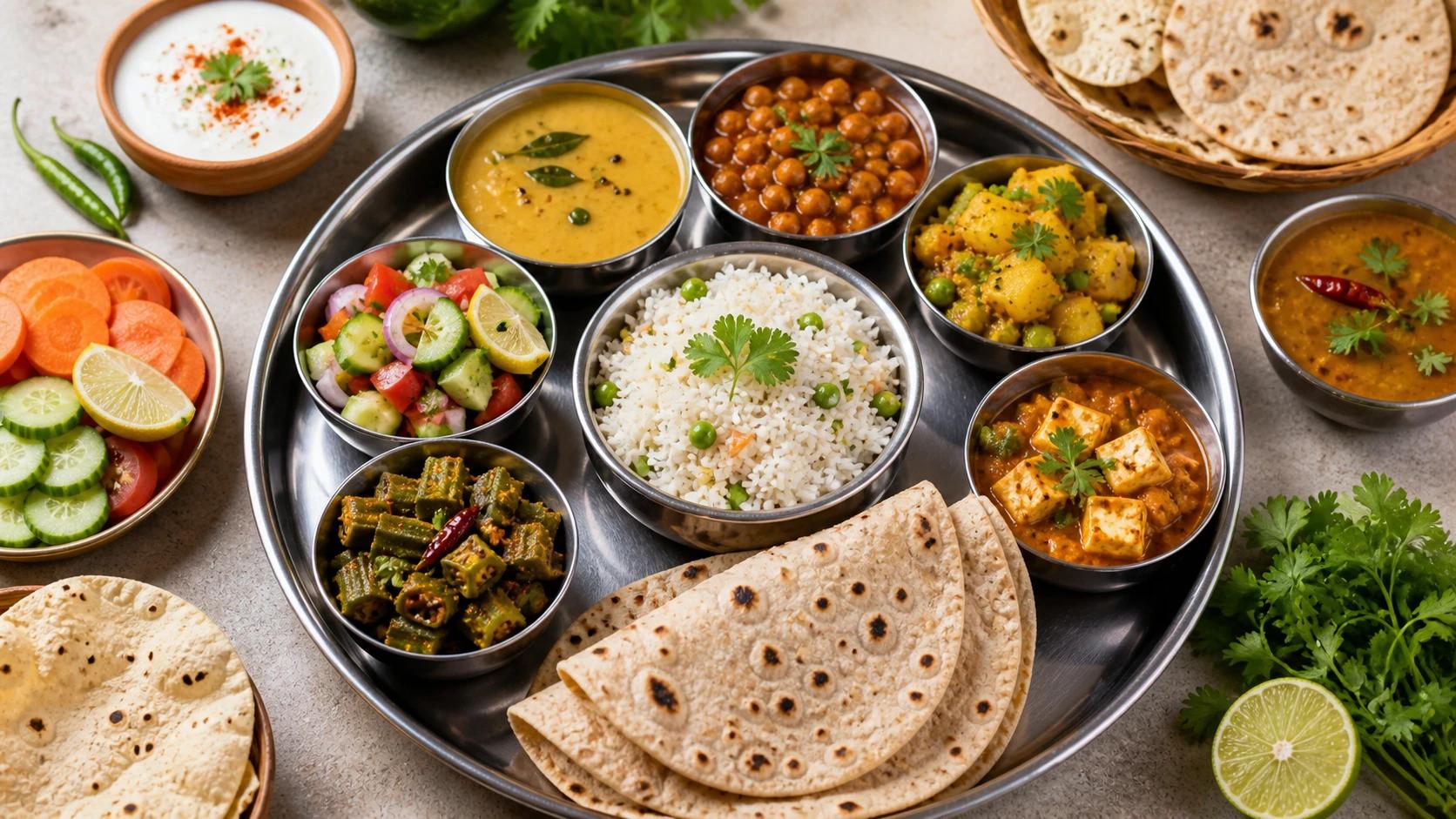
Lunch should be your most substantial meal of the day. A well-structured weight loss lunch might include one or two rotis (whole wheat or jowar/bajra), a protein-rich dal or sabzi like palak paneer or rajma, a large portion of salad, and a small bowl of curd. Prioritise vegetables and protein on your plate first, then add carbohydrates. Rice is not forbidden — a moderate portion of brown rice with dal and sabzi is a perfectly balanced weight loss meal.
Evening snack (4–5 PM)
This is the danger zone for most people — the gap between lunch and dinner when hunger strikes and the temptation to reach for something fried or sweet is strongest. Plan this snack deliberately. Green tea with a small handful of mixed nuts, sprouts chaat with lemon and chilli, or a small bowl of makhana (fox nuts) roasted in minimal ghee are all satisfying and weight-loss-friendly.
Dinner (7–8 PM)
Keep dinner lighter than lunch and aim to eat it at least two hours before bedtime. A bowl of dal with one roti, a vegetable soup with whole grain toast, or grilled paneer with a vegetable stir-fry all work well. Avoid heavy, oily gravies, fried foods, and large portions of rice in the evening — your activity level drops at night, so your body needs less fuel.
Post-dinner (if needed)
If hunger strikes after dinner, a small glass of warm turmeric milk (haldi doodh) is satisfying, anti-inflammatory, and low in calories. Avoid raiding the kitchen for leftovers — this habit alone can undo an otherwise well-managed day.

Moisturizer for Oily Skin | Hyaluronic Acid, Ceramides & Cica | Controls Sebum & Unclogs Pores | For Oily, Combination & Acne-Prone Skin | 50g
High-protein Indian staples
Dal in all its forms — moong, masoor, toor, chana — is the backbone of an effective Indian weight loss diet. It's high in protein and fibre, low in fat, and deeply satisfying. Paneer, when eaten in moderate quantities and not deep-fried, is an excellent protein source for vegetarians. Curd and chaas provide protein alongside probiotics that support gut health, which is increasingly linked to weight management. Eggs, for non-vegetarians, remain one of the most affordable and complete protein sources available.
Fibre-rich vegetables and legumes
Vegetables like lauki (bottle gourd), palak, methi, karela, and cauliflower are low in calories and high in fibre and micronutrients. Rajma, chole, and all varieties of sprouts are filling, nutritious, and easy to incorporate into everyday Indian cooking. Increasing the proportion of these on your plate is one of the most effective adjustments you can make.
Smarter carbohydrate choices
Replace refined maida-based foods with whole grain alternatives. Jowar, bajra, and ragi rotis are nutritionally superior to plain wheat rotis and keep you fuller for longer. When eating rice, try replacing half the portion with cauliflower rice or simply reduce the serving size and increase the dal and vegetable portions to compensate.
Healthy fats in the right amounts
Ghee has been demonised in weight loss conversations but used in small quantities — half a teaspoon on a roti, for example — it actually supports digestion and adds satiety. Coconut, mustard oil, and cold-pressed oils used in traditional Indian cooking are preferable to refined vegetable oils. The issue is rarely the type of fat but the quantity used.
Certain foods common in the Indian diet are significant contributors to excess calorie consumption and are worth limiting rather than eliminating entirely. Deep-fried snacks like samosas, pakodas, and puris are calorie-dense with little nutritional value. Sweetened beverages including sugary chai, cold drinks, and packaged fruit juices can add several hundred hidden calories daily. Refined flour products like white bread, maida rotis, and biscuits spike blood sugar rapidly and leave you hungry sooner. White rice in very large portions, restaurant gravies loaded with cream and butter, and full-fat sweets like gulab jamun and barfi are best reserved for occasional enjoyment rather than daily eating.

Lush Hand Cream | Deep Hydration | Non-Greasy | Targets Hyperpigmentation | Alpha Arbutin + Vitamin E + Mango Butter | Patchouli Vanilla | 30g
Cook with less oil by using non-stick pans, steaming, or air-frying where possible. Reduce the quantity gradually so your palate adjusts without the food feeling bland. Use the plate method: fill half your plate with vegetables and salad, one quarter with protein (dal, paneer, eggs), and one quarter with whole grain carbohydrates. Eat slowly and without screens — this simple habit alone significantly improves satiety signals and reduces overall intake. Plan your meals in advance for the week so you're not making impulsive food decisions when hungry.
Sustainable weight loss on an Indian diet plan is typically 0.5–1 kg per week. Initial weeks may show faster loss due to water weight reduction — this is normal. Visible changes in how clothes fit often appear around weeks 3–4. Significant, noticeable fat loss typically becomes apparent between months 2 and 3 with consistent effort. Aim for gradual, steady progress rather than dramatic short-term results — the slower the loss, the more likely it is to stay off permanently.
Can I eat rice and still lose weight on an Indian diet? Yes. Rice is not the enemy — portion size is. A moderate serving of rice paired with protein-rich dal and vegetables is a balanced, weight-loss-compatible meal. Switching to brown rice adds fibre and improves satiety, but even white rice in controlled portions fits within a calorie deficit diet.
How many rotis should I eat per day to lose weight? This depends on your total calorie target, but 2–3 whole wheat or millet rotis per day is a reasonable range for most women; men may manage 3–4. Opt for thinner rotis without added ghee at every meal, and pair them with protein-heavy accompaniments to slow digestion and improve fullness.
Is a vegetarian Indian diet effective for weight loss? Very much so. A well-planned vegetarian Indian diet is naturally high in fibre and, with attention to protein sources like dal, paneer, curd, and legumes, can fully support fat loss and muscle preservation. Many of the world's most effective weight loss dietary patterns are predominantly plant-based.
What is the best Indian breakfast for weight loss? Moong dal chilla, vegetable upma made with oats or semolina in small quantities, plain dahi with fruit, or eggs prepared without excess oil are all excellent options. The key is keeping breakfast protein-rich and avoiding excess sugar and refined carbohydrates in the first meal of the day.
Should I give up chai to lose weight? Not necessarily. Switching from two teaspoons of sugar to one, using low-fat milk, and limiting yourself to one or two cups a day makes chai a perfectly manageable part of a weight loss diet. It's the biscuits and namkeen alongside the chai that typically cause more damage than the chai itself.
The best Indian diet plan for weight loss is not a foreign meal plan awkwardly adapted to Indian tastes - it's your everyday food, thoughtfully reorganised. More dal, more vegetables, smarter portions, fewer fried extras, and consistent habits over weeks and months. That's it.
You don't need to give up rotis, avoid ghee entirely, or eat boiled food out of a tiffin box. You need a plan that fits your life, respects your food culture, and creates a sustainable calorie deficit without making mealtimes something to dread. Start with one meal, build the habit, and let consistency do the rest.
Note: Individual calorie needs vary based on age, height, weight, activity level, and health conditions. If you have diabetes, thyroid issues, or any other medical condition, please consult a registered dietitian before making significant dietary changes.
