Do Home Air Purifiers Actually Work? Everything You Need to Know Before You Buy


Moisturizer for Oily Skin | Hyaluronic Acid, Ceramides & Cica | Controls Sebum & Unclogs Pores | For Oily, Combination & Acne-Prone Skin | 50g
You close your windows to keep the pollution out. You vacuum regularly, burn the occasional incense stick, and maybe keep a few indoor plants that someone once told you clean the air. And yet there's still that faint dusty smell in the morning, your child's allergies haven't improved despite the doctor's visits, and you wake up with a vaguely scratchy throat more mornings than you'd like to admit.
Here's what most people don't realise: the air inside your home is frequently more polluted than the air outside it. In Indian cities, where outdoor pollution levels already rank among the world's worst, the indoor environment compounds the problem through cooking smoke, dust mites, pet dander, mould spores, chemical off-gassing from furniture and paints, and the simple act of bringing outdoor air inside on your clothes, shoes, and skin.
A home air purifier doesn't solve every air quality problem. But used correctly and chosen thoughtfully, it makes a measurable, genuinely felt difference to the air your family breathes every single day.
Most conversations about air pollution focus on what's happening outside — AQI readings, vehicular emissions, industrial pollutants. The indoor air quality crisis is quieter, less visible, and in many ways more insidious precisely because home feels like a sanctuary.
The Environmental Protection Agency estimates that indoor air can be two to five times more polluted than outdoor air — and in some cases, significantly worse. In Indian homes specifically, the sources are numerous and layered. Cooking on gas stoves releases nitrogen dioxide and carbon monoxide. Incense sticks, agarbatti, and dhoop — deeply embedded in daily Indian household routines — release particulate matter and volatile organic compounds (VOCs) in concentrations that exceed safe limits within minutes of burning. New furniture, carpets, and paints off-gas formaldehyde and other chemicals for months after purchase. Dust mites thrive in warm, humid Indian climates and are a leading trigger for year-round allergies and asthma.
Add to this the seasonal reality of festivals — Diwali fireworks driving outdoor AQI into hazardous territory, smoke drifting indoors through every gap — and the case for a home air purifier in the Indian context becomes not a luxury but a straightforward health decision.
Understanding the technology helps you choose correctly and set realistic expectations.
HEPA filtration: the gold standard
HEPA — High Efficiency Particulate Air — filters are the core of any effective home air purifier. A true HEPA filter captures 99.97% of particles 0.3 microns and larger. To put that in perspective, a human hair is approximately 70 microns wide. HEPA filters capture dust, pollen, pet dander, mould spores, and most bacteria at sizes far too small to see with the naked eye.
What HEPA filters do not capture are gases, odours, and VOCs — which is why most quality air purifiers combine HEPA filtration with an activated carbon layer.
Activated carbon filtration
Activated carbon — a highly porous material with an enormous surface area — adsorbs gases, odours, smoke, and VOCs that HEPA filters cannot trap. This is the layer responsible for removing cooking smells, cigarette smoke odour, formaldehyde from new furniture, and the chemical smell of cleaning products. For Indian homes where cooking is aromatic and frequent, activated carbon filtration is not optional — it is essential.

2% Salicylic Acid Face Serum | Reduces Open Pores, Blackheads & Whiteheads | With 5% Niacinamide | For All Skin Types | 30ml
Pre-filters
Most quality air purifiers include a washable pre-filter that captures larger particles — visible dust, hair, and fibres — before they reach and clog the HEPA filter. This extends HEPA filter life significantly and reduces running costs. A pre-filter that can be cleaned regularly rather than replaced is a meaningful practical advantage.
UV-C and ionisers: proceed with caution
Many air purifiers include UV-C lights claiming to kill bacteria and viruses, or ionisers that release negatively charged ions to make particles clump and fall. The evidence for UV-C effectiveness in consumer air purifiers is mixed — the exposure time as air passes through is often insufficient to meaningfully sterilise. Ionisers, meanwhile, can produce ozone as a byproduct — itself a lung irritant. Neither is a reason to avoid a purifier that includes these features, but neither should be the reason you choose one. HEPA and activated carbon remain the features that matter most.
CADR rating — the number that matters most
Clean Air Delivery Rate (CADR) measures how quickly an air purifier cleans air in a given space, expressed in cubic metres per hour. This is the single most important specification when evaluating a home air purifier. A purifier with a high CADR relative to room size will clean the air more times per hour — the industry recommendation is at least four to five air changes per hour for meaningful air quality improvement.
Match the purifier's CADR to your room size before anything else. A purifier sized for a 150 square foot room will be ineffective in a 300 square foot living room regardless of how many other features it includes.
Room coverage and placement
Most manufacturers specify maximum room coverage for their purifiers. As a practical rule, size down slightly from the maximum — a purifier rated for 400 square feet used in a 300 square foot room will perform more effectively and run at lower, quieter fan speeds than one operating at its limit. For an entire home, multiple strategically placed purifiers outperform a single large unit attempting to clean air across rooms, corridors, and multiple floors.
Place your purifier where air circulates freely — not in corners or behind furniture. The bedroom is typically the highest priority placement, given that adults spend seven to nine hours there daily and air quality directly impacts sleep quality and recovery.
Noise levels
A home air purifier that runs silently on its highest setting doesn't exist — but the difference between a well-engineered quiet unit and a poorly designed loud one is significant. Look for noise level specifications in decibels. Below 35 dB on the lowest setting is suitable for bedroom use. Auto mode — which adjusts fan speed based on detected air quality — is a valuable feature that reduces noise during low-pollution periods while responding automatically when air quality worsens.
Filter replacement costs and availability

Advanced Anti-Pigmentation Kit | Hyperpigmentation Reduction Kit | Cleanser, Serum, Moisturizer & Sunscreen | Complete Skin Care Routine
The purchase price of a home air purifier is only part of the real cost. HEPA and activated carbon filters require replacement every six to twelve months depending on pollution levels and usage — a significant recurring expense that varies considerably between brands. Before purchasing, verify that replacement filters are readily available in India and factor their annual cost into your decision. Some brands price the purifier competitively and recoup margin on expensive proprietary filters — a pattern worth researching before committing.
Smart features
Air quality sensors that display real-time PM2.5 readings are genuinely useful — they show you actual air quality rather than requiring you to guess, and they allow auto mode to function intelligently. Wi-Fi connectivity and app control are convenient but not essential. A good physical air quality indicator — a colour-coded display showing current pollution level — provides the same information without the complexity.
Bedroom — highest priority
The bedroom is where you spend the most concentrated time in your home. Running a home air purifier in the bedroom overnight, with the door closed to maximise efficiency, meaningfully improves the air quality during the hours your body is most actively repairing itself. Those with allergies, asthma, or chronic respiratory issues typically notice the most immediate benefit from bedroom placement.
Living room — second priority
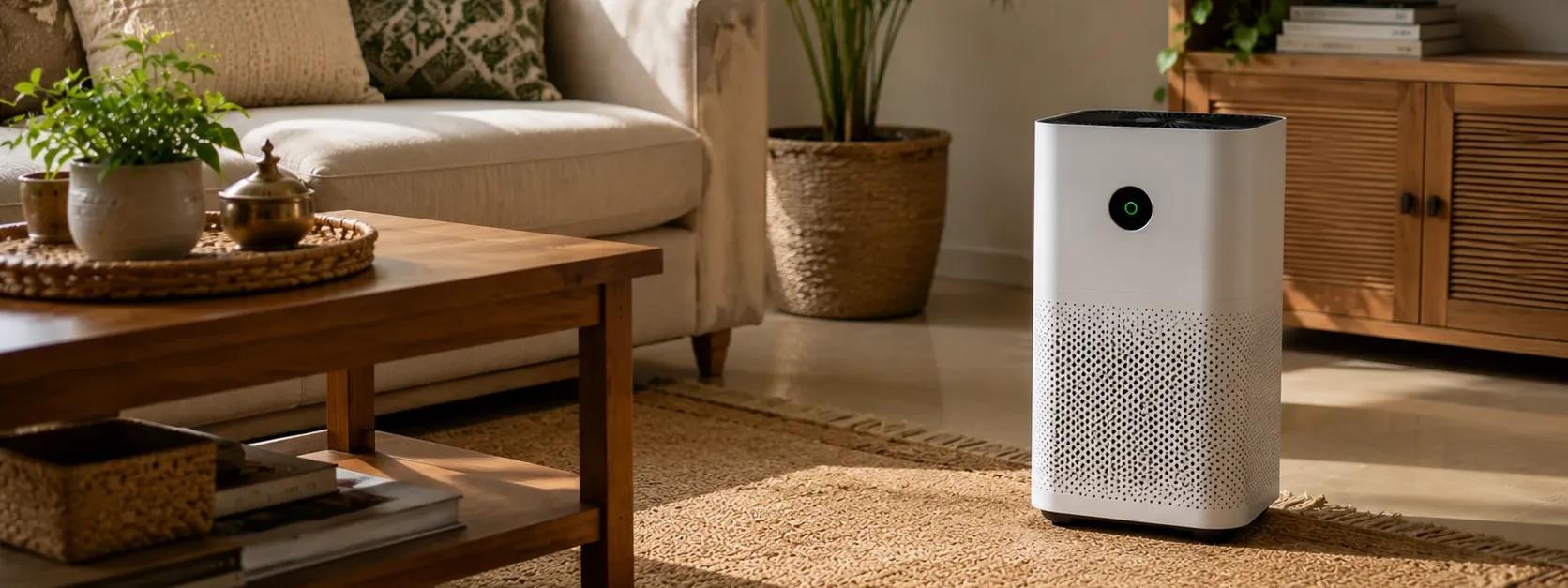
The living room is the highest-traffic area and often adjacent to the kitchen — making it a receptor for cooking pollutants, outdoor air brought in through doors and windows, and dust from foot traffic. A mid-to-large capacity purifier here manages daytime air quality across the household's most active hours.
Kitchen — specific consideration
Standard home air purifiers are not designed to handle the concentrated, immediate pollutants generated by active cooking — the heat, grease, and volume of smoke exceed their capacity. A kitchen chimney or range hood addresses the acute cooking pollution problem. An air purifier placed in the adjacent dining or living area handles residual pollutants that migrate out of the kitchen after cooking.
Children's room
Children's developing respiratory systems are significantly more vulnerable to air pollution than adults'. If budget allows only one purifier, a child's bedroom is a strong case for first placement — particularly for children with existing respiratory conditions, frequent colds, or allergy symptoms.
Diwali and festival season

Target & Fade Duo for Hyperpigmentation | Even-Tone Underarms, Inner Thighs & Bum | Refines Skin Texture | For All Skin Types
Outdoor AQI during Diwali in major Indian cities regularly reaches severe or hazardous levels, and the particulate matter infiltrates indoor spaces through every available gap. Running home air purifiers continuously during and immediately after festival periods — keeping windows and doors closed as much as possible — provides meaningful protection. Expect filter replacement to be needed sooner following sustained hazardous air quality periods.
Monsoon and mould
High humidity during the Indian monsoon season creates ideal conditions for mould growth — a significant indoor air pollutant and allergen. HEPA filters capture mould spores effectively. Pairing an air purifier with a dehumidifier in particularly damp rooms or climates addresses both the symptom and the source.
Pet owners
Pet dander — microscopic flecks of skin shed by animals — is one of the most potent indoor allergens. HEPA filtration captures dander effectively, and homes with pets typically notice meaningful allergy symptom reduction within days of running a quality air purifier consistently. Pre-filters will need more frequent cleaning in pet-owning households.
The honest answer is yes — with important qualifications. A quality home air purifier with true HEPA and activated carbon filtration, correctly sized for the room and run consistently, measurably reduces indoor particulate matter, allergens, and VOCs. Multiple peer-reviewed studies confirm significant reductions in PM2.5, allergen levels, and associated health symptoms in homes using properly specified air purifiers.
What they do not do is eliminate all indoor air quality problems. They do not replace ventilation, address the source of pollutants, or function effectively in rooms much larger than their rated coverage. They require consistent use — turning a purifier on only when you notice the air smells bad is far less effective than running it continuously on auto mode. And they require filter maintenance — a clogged, overdue-for-replacement filter is not only less effective but can become a source of pollutants itself.
How long should I run my home air purifier each day? For meaningful air quality improvement, run your purifier continuously on auto mode rather than switching it on and off. Modern purifiers on auto or low settings consume minimal electricity — comparable to a standard LED bulb — making continuous operation affordable. The air quality benefit of continuous use far exceeds intermittent use.
Can I use one air purifier for my entire home? A single purifier can only effectively clean the air in the room it's placed in, with the door closed. Air purifiers do not meaningfully improve air quality across multiple rooms, corridors, and floors. For whole-home coverage, multiple units placed in priority rooms is the practical solution.
How often do I need to replace the filters? HEPA filters typically require replacement every six to twelve months in Indian urban environments — more frequently during high-pollution seasons or in homes with pets and smokers. Activated carbon filters may need replacing every three to six months. Pre-filters should be cleaned monthly. Always follow the manufacturer's guidance and replace promptly — delayed filter replacement significantly reduces effectiveness.
Are air purifiers safe to run overnight in a closed bedroom? Yes, provided the purifier does not produce ozone — check that any ioniser feature can be disabled. Running a HEPA-based air purifier overnight in a closed bedroom is not only safe but recommended for those with allergies, asthma, or sleep disruption related to air quality.
What is the difference between an air purifier and a humidifier? They solve different problems. An air purifier removes pollutants — particulate matter, allergens, gases — from the air. A humidifier adds moisture to dry air. Some homes benefit from both, particularly in winter when heating systems dry indoor air significantly. They can be used simultaneously without interference.
Is an expensive air purifier always better? Not necessarily. The most important factors — CADR rating, true HEPA filtration, activated carbon layer, and filter availability — are present in mid-range purifiers from reputable brands. Very cheap purifiers often lack true HEPA filters, have inadequate CADR for the rooms they claim to cover, or use proprietary filters that are expensive and hard to source. Research the specific model rather than relying on price as a quality indicator.
