Sunscreen for Indian Skin FAQ: UVA/UVB Protection Guide


Tinted Sunscreen SPF 50 | Makeup-Friendly | No White Cast | Niacinamide + Titanium Dioxide | For Oily, Combination & Acne-Prone Skin | 40ml
Picture this: you're standing in a pharmacy aisle, overwhelmed by rows of sunscreen bottles promising everything from SPF 15 to SPF 100. The Indian sun beats down outside, and you know your skin needs protection, but which one actually works? With UV radiation levels in India often reaching extreme levels year-round, choosing the right sunscreen for Indian skin isn't just about preventing sunburn—it's about protecting against premature ageing, hyperpigmentation, and long-term skin damage. Let's decode the science behind UVA and UVB protection so you can make the right choice for your skin.
India's geographical location near the equator means we face some of the highest UV radiation levels globally. The UV index regularly hits 8-12 across most Indian cities, which falls into the "very high" to "extreme" categories. This intense exposure creates unique challenges that many international sunscreen formulations weren't designed to handle.
Indian skin has higher melanin content, which provides some natural protection against UV damage. However, this doesn't make us immune—it actually creates different vulnerabilities. Higher melanin levels mean our skin is more prone to post-inflammatory hyperpigmentation when damaged, leading to those stubborn dark spots that take months to fade.
The combination of intense heat, humidity, and pollution in Indian cities also affects how sunscreen performs on our skin. Products that work beautifully in temperate climates might feel heavy, cause breakouts, or simply sweat off within hours here. This is why understanding both UVA and UVB protection becomes crucial for Indian consumers.
Indian summers bring temperatures soaring above 40°C in many regions, with humidity levels that make even lightweight formulations feel heavy. Coastal cities like Mumbai and Chennai face additional challenges with reflected UV rays from water surfaces, whilst northern plains deal with dust and pollution that can interfere with sunscreen application.
Not all UV rays are created equal, and understanding the difference between UVA and UVB is essential for choosing effective protection. Think of UVB rays as the "burning" rays—they're responsible for that painful redness after a day at the beach. UVA rays, however, are the silent ageing culprits that penetrate deeper into your skin.
UVA rays make up about 95% of the UV radiation reaching Earth's surface. They're present year-round, can penetrate glass windows, and are the primary cause of photoageing and hyperpigmentation. For Indian skin, UVA protection is particularly crucial because these rays trigger melanin production, leading to uneven skin tone and dark spots.
UVB rays are more intense during peak hours (10 AM to 4 PM) and vary seasonally. They're responsible for sunburn and play a role in skin cancer development. In India's intense sun, even brief UVB exposure can cause significant damage.
Broad spectrum sunscreen protects against both UVA and UVB rays. Look for products that specifically mention "broad spectrum" on the label—this isn't just marketing speak, it's a regulated claim that ensures the product meets specific protection standards.
The PA rating system, commonly used in Asian countries, specifically measures UVA protection. PA+ offers some protection, whilst PA++++ provides the highest level of UVA defence. For Indian conditions, aim for at least PA+++ rating.

Sunscreen Spray for Body | SPF 50+ PA+++ | Sweat & Water-Resistant | Broad Spectrum UVA/UVB Protection | Clear Matte Formula | Aloe Vera | 100ml
The SPF debate often confuses consumers, especially when marketing claims suggest higher numbers always mean better protection. In reality, the difference between SPF 30 and SPF 50 is smaller than you might think, but the choice depends on your specific circumstances.
SPF 30 sunscreen blocks approximately 97% of UVB rays, whilst SPF 50 sunscreen blocks about 98%. That 1% difference might seem minimal, but in India's extreme UV conditions, it can be significant for certain skin types and lifestyles.
SPF 30 is sufficient for daily wear if you're mostly indoors, have darker skin that tans rather than burns, and can reapply every two hours. It's also ideal for those with sensitive skin who find higher SPF formulations too heavy or irritating.
Opt for SPF 50 if you spend significant time outdoors, have fair or sensitive skin, live in high-altitude areas, or struggle with consistent reapplication. The extra protection provides a safety buffer for real-world usage, where most people apply less sunscreen than recommended.
For Indian summers, dermatologists often recommend SPF 50 as the baseline, especially for facial use where reapplication can be challenging over makeup.
Your skin type significantly influences which sunscreen formulation will work best in Indian conditions. The wrong choice can lead to breakouts, excessive oiliness, or inadequate protection—none of which help your skin health goals.
Sunscreen for oily skin should be lightweight, non-comedogenic, and preferably gel-based or fluid. Look for formulations containing niacinamide or zinc oxide, which can help control excess oil whilst providing protection. Avoid heavy creams that might clog pores in India's humid climate.
Chemical sunscreens often feel lighter on oily skin, but ensure they're specifically formulated to be non-comedogenic. Reapplication is crucial for oily skin types, as natural oils can break down sunscreen protection faster.

SPF 50 Sunscreen for Pigmentation | Lightweight, Non-Greasy, No White Cast | Fades Dark Spot & Acne Marks | For All Skin Types | 50g
Sunscreen for dry skin should double as a moisturiser, containing hydrating ingredients like hyaluronic acid, ceramides, or glycerin. Cream-based formulations work well, providing both protection and nourishment that dry skin craves in air-conditioned environments.
In Indian winters, when humidity drops significantly, a moisturising sunscreen becomes even more important to prevent flaking and irritation.
Sunscreen for sensitive skin typically works best with mineral formulations containing zinc oxide or titanium dioxide. These physical blockers sit on the skin's surface rather than being absorbed, reducing the risk of irritation.
Avoid fragrances, alcohol, and chemical filters like oxybenzone if you have reactive skin. Patch testing is essential before committing to any new sunscreen, especially in India's challenging climate conditions.
Even the best sunscreen fails if applied incorrectly. In India's intense UV environment, proper application becomes even more critical for effective protection.
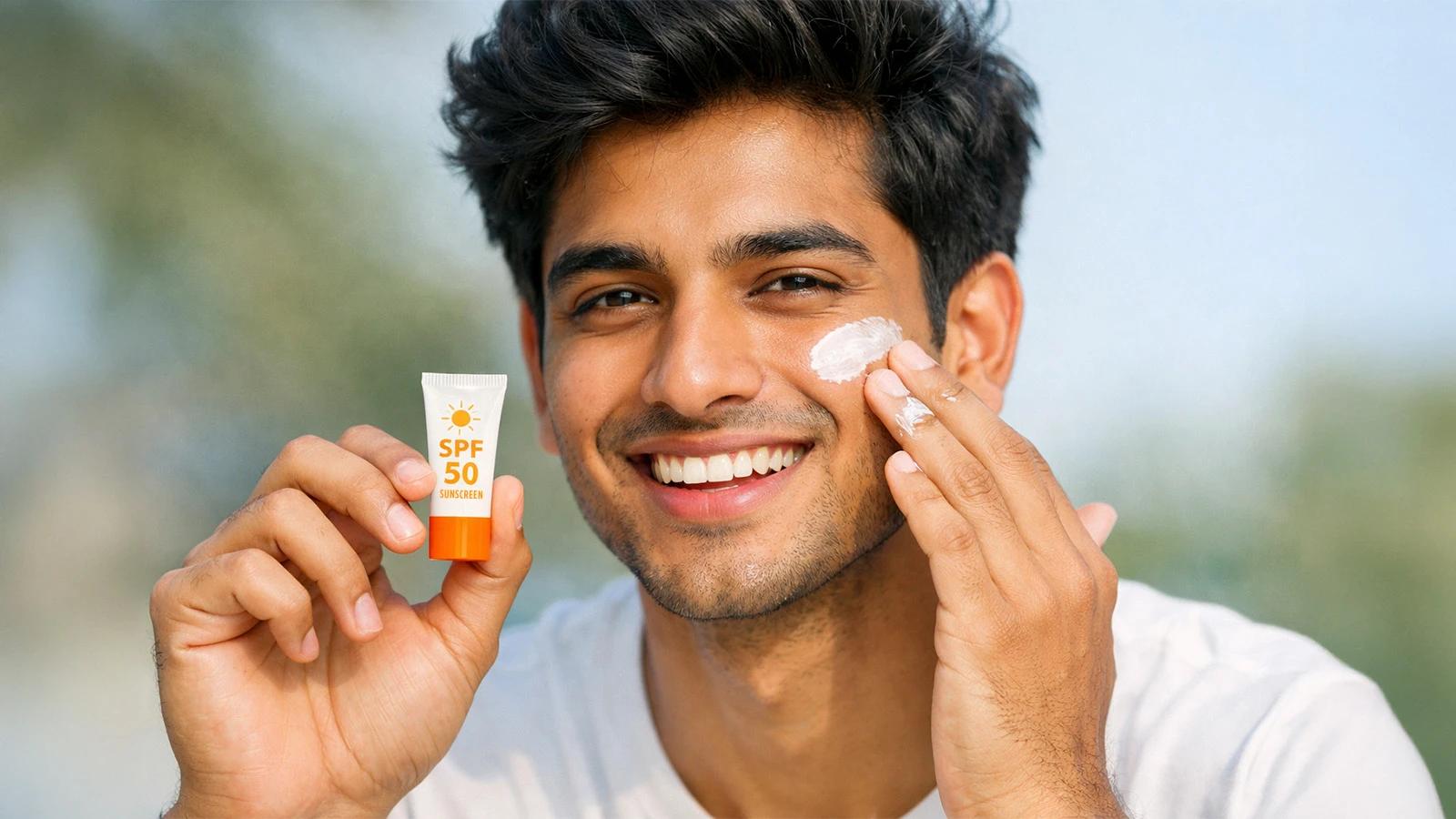
The golden rule is using enough product—most people apply only 25-50% of the recommended amount. For your face and neck, you need about a teaspoon (roughly 1.25ml) of sunscreen. This might seem like a lot, but it's the amount used in laboratory testing to achieve the stated SPF rating.
Apply sunscreen 15-30 minutes before sun exposure to allow proper absorption. In India's heat and humidity, this timing becomes crucial as immediate sun exposure can cause the product to sweat off before it's properly set.
Pay special attention to often-missed areas: ears, neck, hands, and feet. The Indian sun is intense enough to cause significant damage to these exposed areas, yet they're frequently overlooked in daily application routines.
Sunscreen for hot weather requires more frequent reapplication than temperate climates. In Indian summers, aim to reapply every 90 minutes if you're sweating heavily, or every 2 hours for normal indoor-outdoor activity.
For those wearing makeup, powder sunscreens or setting sprays with SPF can help with midday touch-ups without disturbing your base makeup.

Fluid SPF 50 Sunscreen for Oily Skin | No White Cast | Matte, Ultra-Light & Non-Greasy | Niacinamide + Vitamin C | 50ml
Both are essential, but UVA protection is particularly crucial for Indian skin. UVA rays are present year-round and are the primary cause of hyperpigmentation and premature ageing. Since Indian skin is more prone to developing dark spots and uneven tone, prioritising UVA protection through broad spectrum sunscreens with high PA ratings is vital.
PA ratings measure UVA protection levels. PA+ offers basic protection, whilst PA++++ provides the highest level of UVA defence. Given India's intense UV radiation and the tendency for Indian skin to develop hyperpigmentation, PA+++ or PA++++ is recommended for optimal protection against photoageing and dark spots.
In India's hot, humid climate, reapply every 90 minutes to 2 hours, or immediately after heavy sweating or swimming. The intense heat and humidity can break down sunscreen faster than in cooler climates, making frequent reapplication essential for maintaining protection.
Whilst you can use the same SPF level year-round, you might want to adjust the formulation seasonally. During monsoons, water-resistant formulas work better. In winter, when humidity drops, a more moisturising sunscreen might be preferable. The UV protection needs remain constant, but comfort and performance can vary with seasons.
Not necessarily. Effective sunscreen depends on proper formulation, not price. Many affordable options provide excellent broad spectrum protection suitable for Indian conditions. Focus on SPF level, PA rating, broad spectrum protection, and ingredients suitable for your skin type rather than price alone.
Most Indian dermatologists recommend a minimum of SPF 30 for daily use, with SPF 50 preferred for extended outdoor activities or during peak summer months. This recommendation accounts for India's high UV index levels and the tendency for people to apply less sunscreen than the tested amount.
Choosing the right sunscreen for Indian conditions requires understanding both UVA and UVB protection, selecting appropriate SPF levels, and matching formulations to your skin type. The intense UV radiation in India makes broad spectrum protection non-negotiable, whilst the climate demands formulations that can withstand heat, humidity, and frequent reapplication.
Remember, the best sunscreen is the one you'll use consistently. Whether you prefer lightweight gels for oily skin or moisturising creams for dry skin, consistency in application matters more than finding the "perfect" product. With platforms like Smytten Shop, you can explore curated selections of premium sunscreens, try samples before committing to full sizes, and discover formulations that work specifically for your skin's needs in Indian conditions.
Your skin will thank you for taking the time to understand and implement proper sun protection. Real talk: it's one of the most important steps in any skincare routine, especially when living with India's year-round intense sunshine.
