What SPF Do Doctors Recommend for Daily Use? FAQ

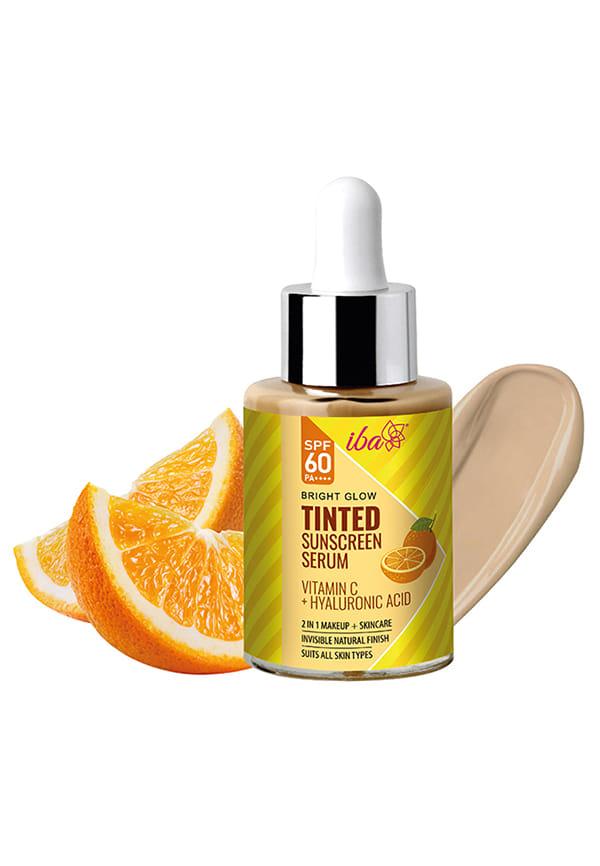
Bright Glow Tinted Sunscreen Serum for All Skin Types SPF 60 PA++++
Great product, perfect match!
 5
5“It is very effective, and the best part is that it blends really well with my skin tone.”
Amazing Product
5“awesome product I am shocked after use this”
Excellent Foundation
5“it's so easy to use,no white cast,so smooth like serum.there is no another use for a foundation”
Choosing the right SPF for daily use can feel overwhelming when you're standing in the skincare aisle, faced with options ranging from SPF 15 to SPF 100+. The good news? Dermatologists have reached a clear consensus on what works best for everyday protection. Whether you're dealing with sensitive skin that reacts to everything, acne-prone skin that needs non-comedogenic formulas, or simply want reliable protection for your daily commute, understanding what doctors actually recommend can transform your skincare routine. From the science behind SPF numbers to the difference between mineral and chemical sunscreens, we'll break down everything you need to know about dermatologist-approved daily sun protection. Thanks to trial platforms like Smytten, you can now test doctor-recommended formulas before committing to full-size products, making it easier than ever to find your perfect daily SPF match.
TL;DR
Dermatologists recommend SPF 30 as the minimum for daily use, blocking 97% of UVB rays effectively
Broad spectrum protection is non-negotiable - it shields against both UVA and UVB damage
Mineral sunscreens (zinc oxide, titanium dioxide) are preferred for sensitive and acne-prone skin
SPF 50 is recommended for fair skin, outdoor workers, or high UV index areas
Proper application (1/4 teaspoon for face) and reapplication every 2 hours matters more than high SPF numbers
When dermatologists worldwide were surveyed about daily SPF recommendations, the answer was remarkably consistent: SPF 30 represents the sweet spot for everyday protection. This isn't arbitrary - it's based on solid science and real-world application patterns. According to guidelines from the American Academy of Dermatology and the Indian Association of Dermatologists, SPF 30 is the minimum.
SPF 30 blocks approximately 97% of UVB rays, which are primarily responsible for sunburn and contribute significantly to skin cancer risk. The jump from SPF 30 to SPF 50 only increases protection by about 1%, blocking 98% of UVB rays. While this might seem minimal, dermatologists do recommend SPF 50 for specific scenarios.
The effectiveness of SPF 30 lies not just in its protection percentage, but in how people actually use sunscreen. Most of us apply about half the recommended amount, which effectively halves the SPF protection. When you apply SPF 30 thinly, you're getting closer to SPF 15 protection - still reasonable for daily use.
Dermatologists suggest stepping up to SPF 50 if you have fair skin that burns easily, a family history of skin cancer, or work outdoors regularly. Those living in high UV index areas (like most of India during summer months) also benefit from the extra protection SPF 50 provides.
Despite marketing claims, SPF 100+ products offer minimal additional protection (99% vs 98% UVB blocking) but often come with downsides. These ultra-high SPF formulas tend to be thicker, potentially more irritating, and can create a false sense of security that leads to skipping reapplication.
Understanding the different types of sunscreen helps you choose what works best for your skin type and lifestyle. Dermatologists categorise sunscreens into two main types: mineral (physical) and chemical, each with distinct advantages.
Before diving into mineral versus chemical, every dermatologist emphasises one crucial requirement: broad spectrum protection. This means the sunscreen protects against both UVA and UVB rays.
UVB rays cause immediate damage like sunburn, while UVA rays penetrate deeper, causing premature ageing and contributing to skin cancer. A sunscreen might have SPF 50 but offer poor UVA protection - that's why the "broad spectrum" label is essential.
Mineral sunscreens contain zinc oxide and/or titanium dioxide as active ingredients. These work by sitting on the skin's surface and physically blocking UV rays, like a shield.
Dermatologists particularly recommend mineral sunscreens for sensitive skin, rosacea, and acne-prone skin because they're less likely to cause irritation. You know how niacinamide works wonders for oil control, and mineral sunscreens are similarly gentle yet effective. They also provide immediate protection upon application - no waiting period required.
Chemical sunscreens use ingredients like avobenzone, octinoxate, and oxybenzone to absorb UV rays and convert them to heat. They typically offer better cosmetic elegance - meaning they feel lighter and blend more seamlessly under makeup.
However, chemical sunscreens require about 20 minutes to become effective and can sometimes cause irritation in sensitive individuals. Dermatologists often recommend them for daily wear when cosmetic elegance is a priority.
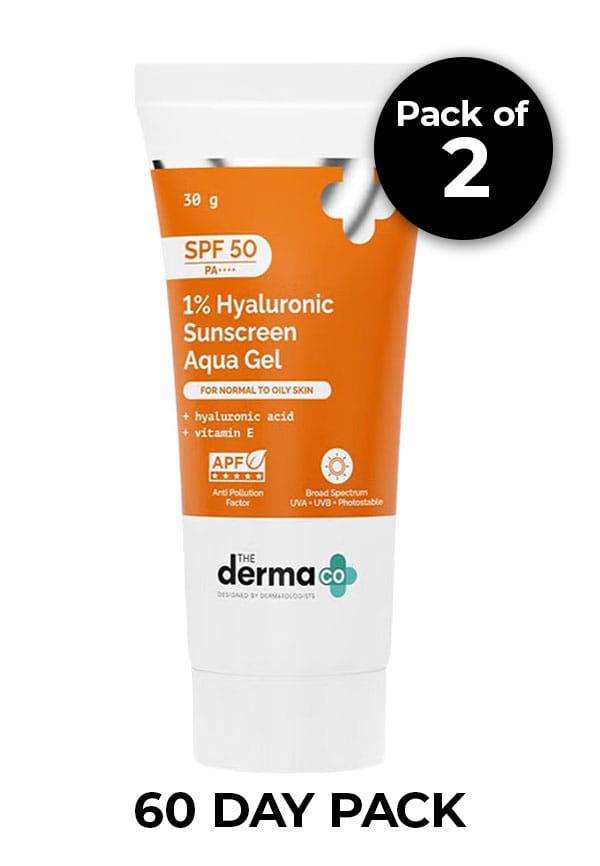
1% Hyaluronic Sunscreen SPF 50 Aqua Gel Pack Of 2
Lightweight for all skin types
5“iys lightweight and suitable for all skin types”
Lightweight for all skin types
5“iys lightweight and suitable for all skin types”
Lightweight for all skin types
5“iys lightweight and suitable for all skin types”
Dermatologists approach sunscreen recommendations differently based on individual skin concerns and types. Here's what they typically suggest for various skin profiles.
For sensitive skin, dermatologists consistently recommend mineral sunscreens with minimal additional ingredients. Look for fragrance-free, hypoallergenic formulations that list zinc oxide or titanium dioxide as the primary active ingredients.
Products like those from The Derma Co. and Dr. Sheth's often feature gentle formulations specifically designed for reactive skin. Always patch test new sunscreens on a small area before full-face application.
Acne-prone skin requires non-comedogenic formulations that won't clog pores. Dermatologists often recommend gel-based or lightweight fluid sunscreens over heavy creams.
Ingredients like niacinamide can be beneficial, as seen in products from Dot & Key and Minimalist, as they help control oil production while providing sun protection. Avoid sunscreens with heavy oils or thick, occlusive textures.
Dermatologists recommend SPF 50+ for daily wear in specific circumstances: if you have very fair skin, a history of skin cancer, or spend significant time outdoors. The key is finding a high SPF formula that you'll actually want to use daily.
Brands like Foxtale and Minimalist offer SPF 50+ formulations that don't feel heavy or leave white residue, making higher protection more wearable for everyday use.
Face-specific sunscreens are formulated to be lighter and more cosmetically elegant than body sunscreens. They're designed to work well under makeup and won't migrate into eyes throughout the day.
Many dermatologist-recommended facial sunscreens, like those from Aqualogica and Pilgrim, include additional skincare benefits like hydration or antioxidants, making them multifunctional products.
Even the best dermatologist-recommended sunscreen won't work properly if you're not applying it correctly. Here's what doctors emphasise about proper sunscreen use.
The most common mistake people make is using too little product. Dermatologists recommend the "1/4 teaspoon rule" - about 1/4 teaspoon of sunscreen for your face and neck. This might seem like a lot, but it's necessary for the stated SPF protection.
Reapplication is equally crucial. Even the most long-wearing sunscreen needs refreshing every two hours, or immediately after swimming, sweating, or towelling off. For daily office wear, this might mean reapplying once during lunch break.
When layering with other skincare products, apply sunscreen as the final step in your morning routine, after moisturiser but before makeup. Allow each layer to absorb before applying the next.
Dermatologists adjust their SPF recommendations based on geographic and climate factors. What works in London might not be ideal for Mumbai's humidity and intense UV exposure.

SPF 40 Natural Sunscreen with Zinc Oxide, Green Tea & Aloe Vera | Broad Spectrum | No White cast
India's high UV index throughout most of the year means dermatologists here often recommend SPF 50 as the daily minimum, rather than SPF 30. The intense sun exposure, combined with pollution, creates unique challenges for skin protection.
Humidity also affects sunscreen choice. Lightweight, gel-based formulations from brands like Deconstruct and Dot & Key are often preferred over heavy creams that might feel uncomfortable in humid conditions.
For oily skin in hot, humid climates, dermatologists recommend gel-based sunscreens with mattifying properties. Look for formulations that include oil-controlling ingredients without compromising sun protection.
Water-resistant formulas are particularly important in humid conditions where sweating is inevitable. However, water-resistant doesn't mean waterproof - reapplication is still necessary.
Product | Skin Type | Key Concern | Price Range | Key Ingredients |
|---|---|---|---|---|
The Derma Co. Ultra Matte Sunscreen Gel SPF 60 | Oily, Combination | Oil control + Sun protection | ₹300-500 | UV Filters |
Minimalist Light Fluid SPF 50 | All skin types | Lightweight daily wear | ₹600-800 | Multi-UV Filters |
Dot & Key Cica + Niacinamide SPF 50+ | Sensitive, Acne-prone | Calming + Protection | ₹400-600 | Cica, Niacinamide |
Dr. Sheth's Ceramide & Vitamin C SPF 50+ | Sensitive, Dull | Barrier repair + Brightening | ₹500-700 | Ceramides, Vitamin C |
Foxtale SPF 70 Matte Finish | Oily, Combination | High protection + Matte finish | ₹400-600 | UV Filters, Niacinamide |
Understanding what dermatologists look for in sunscreen formulations helps you make informed choices. It's not just about SPF numbers - the quality and stability of ingredients matter significantly.
Zinc oxide is considered the gold standard by many dermatologists, particularly in concentrations of 10-25%. It provides excellent broad spectrum protection and is suitable for all skin types, including sensitive and acne-prone skin.
Titanium dioxide is another dermatologist favourite, often used in combination with zinc oxide for enhanced protection. For chemical sunscreens, dermatologists look for stable combinations like avobenzone with octocrylene or newer filters like bemotrizinol.
Water resistance is important even for daily wear, as it indicates the sunscreen will maintain protection despite light sweating or humidity. However, dermatologists emphasise that water-resistant doesn't mean reapplication isn't necessary.
Photostability is another crucial factor - some sunscreen ingredients break down when exposed to UV light, reducing protection over time. Quality formulations include stabilising ingredients to prevent this degradation.
Expired sunscreen is a major concern for dermatologists. Sunscreen ingredients can degrade over time, significantly reducing protection. Check expiration dates and replace products that have been stored in hot conditions.
Spray-only applications for the face are discouraged by most dermatologists because it's difficult to ensure adequate coverage. While sprays can be convenient for reapplication over makeup, they shouldn't be your primary facial sunscreen method.
For most people, SPF 30 provides adequate daily protection, blocking 97% of UVB rays. However, dermatologists recommend SPF 50 for fair skin types, those with a history of skin cancer, or people living in high UV index areas like most of India. The key is choosing an SPF you'll apply generously and reapply consistently.
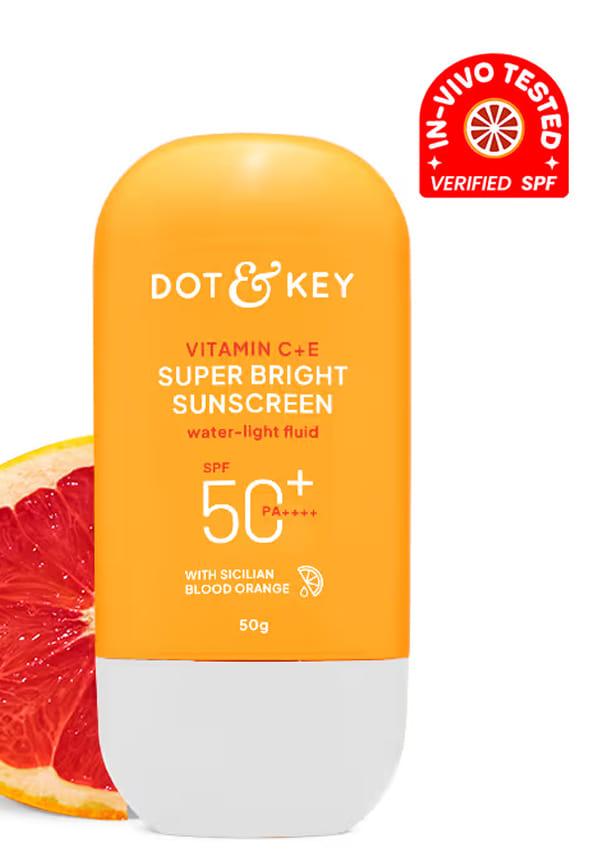
Vitamin C + E Sunscreen, IN-VIVO Tested SPF 50+ PA++++
Loved This Sunscreen
5“I loveeeeee thisssss sunscreemmmm”
Favourite Product
5“one of them my favourite product”
Favourite Product
5“one of them my favourite product”
The best everyday SPF is one that offers broad spectrum protection (both UVA and UVB), feels comfortable on your skin, and fits your lifestyle. For most people, this means SPF 30-50 in a formulation suited to their skin type - gel for oily skin, cream for dry skin, and mineral formulations for sensitive skin.
Most dermatologists recommend SPF 30 as the minimum for daily use, with SPF 50 for higher-risk individuals or intense sun exposure. The American Academy of Dermatology and Indian Association of Dermatologists both support SPF 30+ for daily protection, emphasising that proper application and reapplication matter more than extremely high SPF numbers.
Doctors typically recommend broad spectrum sunscreens with zinc oxide or titanium dioxide for sensitive skin, and well-formulated chemical sunscreens for those prioritising cosmetic elegance. Brands like The Derma Co., Minimalist, and Dr. Sheth's are often mentioned by Indian dermatologists for their science-backed formulations and suitable textures for Indian skin and climate.
Yes, dermatologists strongly recommend daily sunscreen use regardless of weather. Up to 80% of UV rays can penetrate clouds, and UVA rays (which cause ageing and contribute to skin cancer) remain consistent throughout the day. This is why dermatologists emphasise making sunscreen a non-negotiable part of your morning routine.
While body sunscreens provide adequate UV protection, dermatologists generally don't recommend them for daily facial use. Body formulations are often heavier, more likely to clog pores, and may cause eye irritation. Facial sunscreens are specifically formulated to be lighter, less comedogenic, and more comfortable for daily wear under makeup.
Even when working indoors, dermatologists recommend reapplying sunscreen every 2-3 hours if you're near windows, as UVA rays can penetrate glass. For those working away from windows, one application in the morning may be sufficient, but reapplication is still beneficial if you step outside during the day.
Not necessarily. Higher SPF formulations often contain more active ingredients, which can increase the risk of irritation for sensitive skin. Dermatologists typically recommend SPF 30-50 mineral sunscreens with minimal additional ingredients for sensitive skin types. The focus should be on gentle, broad spectrum protection rather than the highest possible SPF number.
Mineral sunscreens (zinc oxide, titanium dioxide) sit on the skin's surface and physically block UV rays, providing immediate protection and being less likely to cause irritation. Chemical sunscreens absorb UV rays and convert them to heat, often offering better cosmetic elegance but requiring 20 minutes to become effective. Dermatologists recommend mineral for sensitive skin and chemical for those prioritising texture and wearability. You can explore both types through Smytten's trial packs to find what works best for your skin.
Given India's high UV index throughout most of the year, dermatologists often recommend SPF 50 as the daily minimum, rather than SPF 30. This provides enhanced protection against intense sun exposure.
For oily skin, dermatologists recommend lightweight, gel-based sunscreens with SPF 30-50. Look for non-comedogenic formulas that offer oil control without compromising broad spectrum protection. Ingredients like niacinamide can be particularly beneficial for managing oiliness.
The dermatologist consensus on daily SPF is clear and practical: SPF 30 broad spectrum protection is the minimum for most people, with SPF 50 recommended for higher-risk individuals or intense sun exposure conditions. The type of sunscreen - mineral versus chemical - matters less than consistent, proper application and choosing a formula you'll actually want to use every day.
Remember that the best sunscreen is the one you'll apply generously (1/4 teaspoon for face and neck) and reapply every two hours. Whether you choose a lightweight gel for oily skin, a hydrating cream for dry skin, or a gentle mineral formula for sensitive skin, consistency trumps perfection in sun protection.
For Indian skin and climate conditions, dermatologists often lean towards SPF 50 formulations in lightweight, humidity-friendly textures. The key is finding a product that feels comfortable enough to become a non-negotiable part of your morning routine, regardless of weather or plans for the day.
Finding the right daily SPF doesn't have to involve expensive trial and error or settling for products that don't quite work for your skin. Smytten is India's largest product discovery and trial platform, connecting consumers with top lifestyle, beauty, wellness, and grooming brands through curated trial packs. With mini-sized products from over 2,400 trusted brands including The Derma Co., Dot & Key, Minimalist, and Dr. Sheth's, you can try before you buy to find your perfect dermatologist-recommended sunscreen. Each mini is linked with Trial Points, and users can get up to 10 Trial Points for just ₹279, with 100% cashback on these minis redeemable for future orders. This makes discovering your ideal daily SPF both affordable and risk-free - when you find a sunscreen you love, buying the full-size version is just a click away in Smytten's shop. With over 28 million users and authentic brand-verified minis delivered across 90% pincode coverage, why settle for 'maybe' when you can #TryItAll and find the doctor-recommended SPF that truly works for your skin?
