How to Incorporate AHA BHA into Your Skincare Routine

How to Incorporate AHA BHA into Your Skincare Routine
Published Date - 31 October 2025
AHA BHA Exfoliating Scalp Serum - 1% Salicylic Acid + 1% Lactic Acid + 2% Zinc Complex100 ml

Deconstruct

AHA BHA Exfoliating Scalp Serum - 1% Salicylic Acid + 1% Lactic Acid + 2% Zinc Complex

69920 % OFF
559
Let's be real—the world of skincare acids can feel like you need a chemistry degree just to understand what goes on your face. But here's the thing: AHA BHA combinations are actually game-changers once you know how to use them properly. Whether you're dealing with stubborn acne, dull skin, or just want that glow everyone's talking about, these chemical exfoliants might just become your new skincare obsession. The trick is knowing how to incorporate them without turning your face into a tomato. Ready to dive into the world of AHA BHA skincare? Let's break it down in a way that actually makes sense.

Understanding AHA and BHA: The Basics of Chemical Exfoliation

Think of AHA and BHA as your skin's personal renovation crew—they're here to clear out the old and make way for the new. But unlike those harsh scrubs that feel like sandpaper, these acids work smarter, not harder. Alpha Hydroxy Acids (AHAs) are water-soluble acids that work on the surface of your skin. They're brilliant at sloughing off dead skin cells, revealing the fresh, glowing skin underneath. The most common ones you'll see are glycolic acid (derived from sugar cane) and lactic acid (from fermented milk). These are your go-to for tackling dullness, fine lines, and uneven skin tone. Beta Hydroxy Acids (BHAs), on the other hand, are oil-soluble, which means they can dive deep into your pores. Salicylic acid is the star of the BHA family, and it's particularly brilliant for anyone dealing with acne or blackheads. It literally gets into your pores and clears out all the gunk that's been camping there.

Chemical vs Physical Exfoliation

Here's why AHA BHA exfoliation beats those grainy scrubs every time. Physical exfoliants can be too harsh and actually create micro-tears in your skin. Chemical exfoliants work by breaking down the bonds between dead skin cells, so they just naturally shed away. It's gentler, more effective, and way more controlled.

Key Differences Between AHA and BHA

AHAs love moisture and work best on normal to dry skin types. They're your mates for anti-ageing and brightening. BHAs prefer oil and are perfect for oily, acne-prone skin. Think of AHAs as surface cleaners and BHAs as deep-pore detectives.

The Powerful Benefits of AHA BHA for Different Skin Types

The AHA BHA benefits are honestly impressive, but they work differently depending on what your skin actually needs. Let's talk about what these acids can actually do for you.

Acne-Prone Skin Solutions

If you're dealing with breakouts, AHA BHA acne
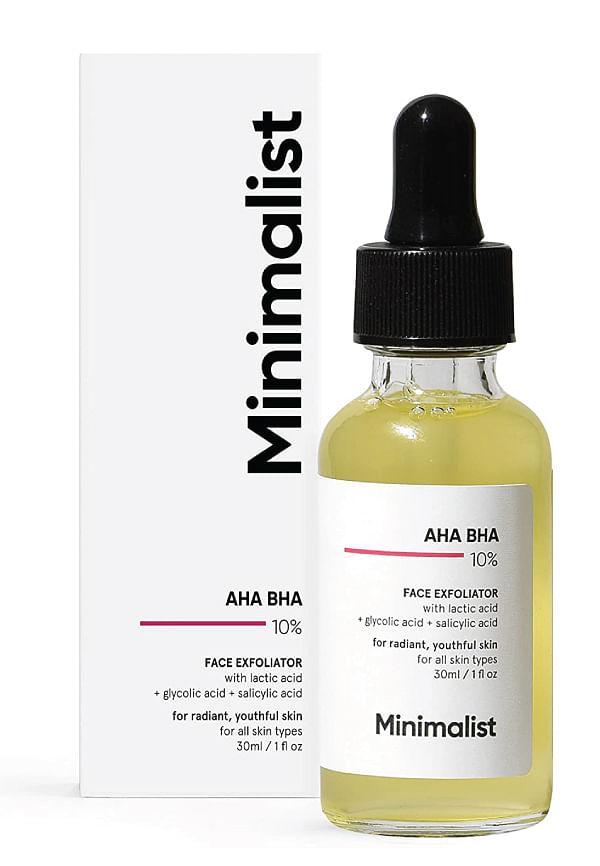
10% AHA BHA Exfoliating Serum30 ml

Minimalist

10% AHA BHA Exfoliating Serum

5995 % OFF
569
treatments are worth trying. BHA (especially salicylic acid) gets into those clogged pores and clears them out. It's anti-inflammatory too, so it calms down angry spots. AHAs help prevent future breakouts by keeping dead skin cells from clogging your pores in the first place.

Anti-Aging and Skin Texture Improvements

For AHA BHA anti-aging benefits, AHAs are your best friend. They boost cell turnover, which means fresher, younger-looking skin. They also help with collagen production, so fine lines start to look less obvious over time. Your skin just feels smoother and looks more radiant.

Addressing Hyperpigmentation

Those dark spots from old breakouts or sun damage? AHAs are brilliant at fading them. They work by speeding up the process of bringing new skin cells to the surface, gradually lightening those stubborn marks.

Pore Refinement and Skin Clarity

BHAs are the pore-minimising champions. They clean out your pores so thoroughly that they actually appear smaller. Plus, when your pores aren't clogged with oil and dead skin, your whole complexion looks clearer and more refined.

Comprehensive Guide to AHA BHA Product Selection

Choosing the right AHA BHA products can feel overwhelming when there are so many options. Here's how to navigate the acid aisle without getting lost.

Types of AHA Acids

Glycolic acid is the smallest molecule, so it penetrates deepest. It's powerful but can be irritating for sensitive skin. Lactic acid is gentler and also hydrating—perfect if you're new to acids. Citric acid is the mildest and often found in combination with other acids.

Types of BHA Acids

Salicylic acid is pretty much the only BHA you'll encounter in skincare, and honestly, it's all you need. It comes in different concentrations, from gentle 0.5% formulas to stronger 2% treatments.

Concentration Levels for Different Skin Concerns

FURR 4% AHA BHA Underarm Roll On with Kojic Acid, Helps Reduce Pigmentation40ml

Pee Safe

FURR 4% AHA BHA Underarm Roll On with Kojic Acid, Helps Reduce Pigmentation

24943 % OFF
142
Start low and go slow. For AHAs, begin with 5-10% concentrations. For BHAs, 0.5-1% is plenty to start with. You can always work up to stronger formulas once your skin gets used to the acids. This is where platforms like Smytten become really handy. You can try mini versions of different AHA BHA products to see what works for your skin before committing to full-size bottles. It's way smarter than guessing and potentially wasting money on products that don't suit you.

How to Safely Incorporate AHA BHA into Your Skincare Routine

Building an effective AHA BHA routine is all about starting slowly and listening to your skin. Trust me, your face will tell you if you're doing too much too fast.

Proper Application Techniques

Always apply acids to clean, dry skin. Use them after cleansing but before moisturiser. Start with just your face, avoiding the eye area. A thin layer is enough—more isn't better with acids.

Frequency of Use

Begin with once or twice a week, then gradually increase if your skin tolerates it well. Some people can use acids daily, others need to stick to a few times a week. Your skin will guide you.

Potential Side Effects and Precautions

Expected: slight tingling, temporary redness, initial purging (more breakouts before improvement). Concerning: burning, persistent redness, excessive dryness. If you experience the latter, scale back immediately.

Combining with Other Skincare Ingredients

Acids play well with hyaluronic acid, niacinamide, and ceramides. They don't mix well with retinol (use on alternate nights) or vitamin C (morning vs evening). Always use SPF during the day when using acids.

AHA BHA vs Other Exfoliation Methods

Let's settle this once and for all—how does AHA BHA vs retinol stack up, and where do physical exfoliants fit in?

Comparison with Physical Scrubs

Physical scrubs can be too harsh and uneven in their exfoliation. Acids provide controlled, consistent exfoliation without the risk of micro-tears. Plus, they offer additional benefits like pore-clearing and anti-ageing that scrubs just can't match.

AHA BHA vs Retinol

Retinol works deeper in the skin and is primarily anti-ageing focused. Acids work on the surface and in pores, tackling texture and clarity. Many people use both, but not at the same time. Think of retinol as your long-term investment and acids as your immediate glow-getter.

Expert Tips for Maximising AHA BHA Benefits

Here's how to get the most out of your AHA BHA combination
AHA BHA Exfoliating Serum||Salicylic Acid & Glycolic Acid30 ml

Foxtale

AHA BHA Exfoliating Serum||Salicylic Acid & Glycolic Acid

54540 % OFF
327
without overwhelming your skin.

Layering Techniques

If using both AHA and BHA, apply BHA first (it has a lower pH), wait 20-30 minutes, then apply AHA. Or use them on alternate nights. Your skin might prefer this gentler approach.

Time of Day Application

Evening is best for acids since they can increase sun sensitivity. If you must use them in the morning, SPF is absolutely non-negotiable.

Complementary Skincare Ingredients

Follow up with hydrating ingredients like hyaluronic acid and niacinamide. These help calm and moisturise skin after acid treatment. For AHA BHA sensitive skin concerns, look for formulas with soothing ingredients like allantoin or panthenol.

Patch Testing and Skin Sensitivity

Always patch test new acid products on your inner arm first. Wait 24-48 hours to see how your skin reacts. If you have sensitive skin, look for lower concentrations and gentler acids like lactic acid.

Frequently Asked Questions

Can I use AHA BHA every day?

It depends on your skin tolerance and the product concentration. Start with 2-3 times per week and gradually increase if your skin handles it well. Some people can use gentle formulations daily, while others need to stick to a few times weekly.

Are AHA BHA suitable for sensitive skin?

Yes, but you'll need gentler formulations and lower concentrations. Look for lactic acid over glycolic acid, and start with 0.5% salicylic acid. Always introduce acids slowly and consider using them just once a week initially.

How long before seeing results?

You might notice smoother texture within a few days, but significant improvements in acne, hyperpigmentation, or fine lines typically take 4-6 weeks of consistent use. Patience is key with acids.

What are the potential side effects?

Common side effects include initial purging (temporary increase in breakouts), mild irritation, dryness, and increased sun sensitivity. Serious side effects like burns or persistent redness mean you should stop using the product immediately.

Can I use AHA BHA with other active ingredients?

Some combinations work well (like with niacinamide), while others should be avoided or used separately (like with retinol or vitamin C). When in doubt, use different actives on alternate nights or consult with a dermatologist.

Key Takeaways

Incorporating AHA BHA into your skincare routine doesn't have to be complicated. Start slow, listen to your skin, and remember that consistency beats intensity every time. These acids can genuinely transform your skin texture, clarity, and overall glow when used properly. The key is finding the right products for your specific skin type and concerns. This is where Smytten's trial approach becomes invaluable—you can explore different AHA BHA skincare formulations from trusted brands without the commitment of full-size purchases. With over 25 million users discovering their perfect skincare matches through trial minis, you can join the community of smart shoppers who refuse to settle for 'maybe' when they can try it all. Remember, great skin is a journey, not a destination. Take your time, be patient with the process, and most importantly, always wear your SPF. Your future self will thank you for taking the thoughtful approach to skincare that actually works.
Sangria Experience Logo
Document