11 Ways to Repair Hair Damage From Rain & Humidity


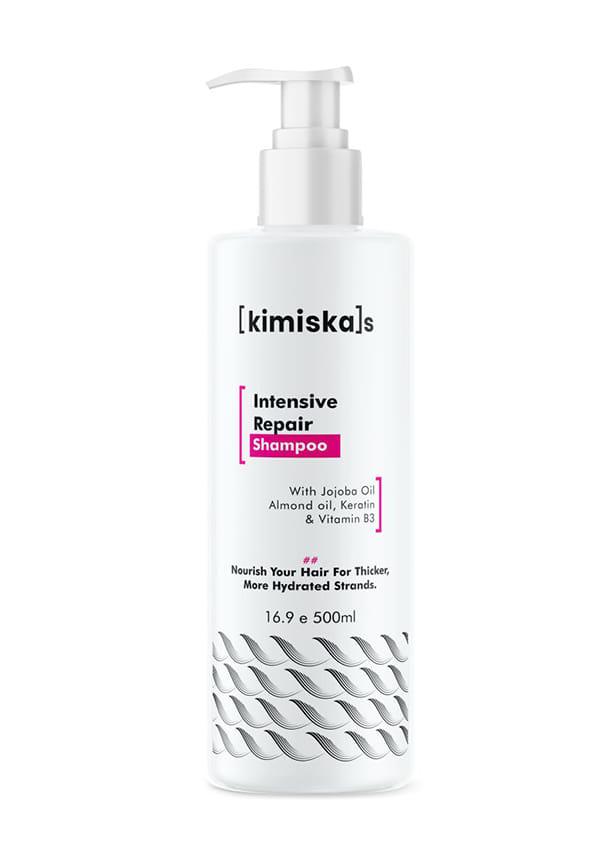
Intensive Hair Repair Shampoo for Dry and Frizzy Hair
Picture this: you step outside feeling like your hair is having its main character moment, only to get caught in an unexpected downpour. Twenty minutes later, you're dealing with a frizzy, tangled mess that looks nothing like the sleek style you started with. If this sounds familiar, you're definitely not alone. Rain and humidity can wreak havoc on even the healthiest hair, leaving you with damage that goes way beyond just a bad hair day. The good news? Hair repair from rain damage is totally doable with the right approach and a bit of patience.
Let's get real about what's actually happening to your hair when the weather gets moody. When humidity levels spike or you get caught in the rain, your hair cuticles—those protective outer layers—start to lift and swell. Think of them like tiny roof tiles that are supposed to lie flat but get ruffled up by moisture. This creates the perfect storm for frizz, tangles, and breakage.
The science behind hair damage from humidity is pretty straightforward but fascinating. Your hair is made up of proteins, mainly keratin, and these proteins have a natural moisture content of about 10-13%. When the air around you is super humid or your hair gets soaked, it can absorb way more moisture than it's designed to handle. This causes the hair shaft to swell unevenly, leading to that dreaded frizzy texture we all know too well.
Here's something that might surprise you: wet hair is actually about 30% weaker than dry hair. When your hair absorbs water, the hydrogen bonds that give it structure temporarily break down. This makes it much more prone to stretching, snapping, and general hair breakage from moisture. That's why being gentle with wet hair is so crucial for preventing long-term damage.
Not all frizz is created equal. Temporary humidity-induced frizz usually settles down once your hair dries properly. But if you're noticing persistent roughness, increased tangles, split ends, or hair that feels brittle even when dry, you're probably dealing with actual damage that needs some TLC. Your hair might also feel less elastic—healthy hair should be able to stretch a bit when wet without snapping immediately.
When you've just been caught in the rain, your first instinct might be to grab the nearest towel and start rubbing vigorously. Please don't do this—it's like taking sandpaper to your already vulnerable hair cuticles. Instead, here are some remedies for wet hair damage that actually work.
Swap that regular terry cloth towel for a microfibre one, or even better, use an old cotton t-shirt. These materials are much gentler and won't rough up your cuticles. Gently press and squeeze sections of your hair to remove excess water—no rubbing or twisting allowed.
Never brush wet hair without protection. Apply a leave-in conditioner or detangling spray first, then use a wide-tooth comb or your fingers to gently work through tangles, starting from the ends and working your way up. This prevents unnecessary breakage and makes the whole process much less painful.
If you absolutely must use a hair dryer, keep it on the cool setting. Heat will only make frizz worse and can cause additional damage to already compromised hair. Better yet, let your hair air dry naturally while applying a humidity-blocking serum to the mid-lengths and ends.
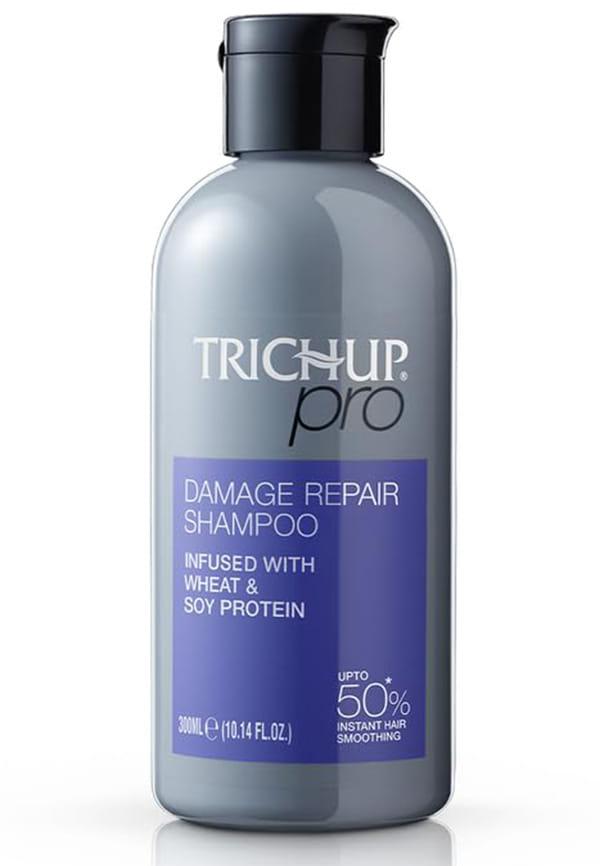
Trichup Pro Damage Repair Shampoo for Dry Frizzy Hair Instant Dual Action
Now that we've covered the immediate damage control, let's talk about actually repairing and strengthening your hair for the long haul. These methods focus on rebuilding your hair's structure and creating a protective barrier against future moisture damage.
If your hair feels mushy or overly stretchy when wet, it probably needs more protein. Look for treatments containing hydrolysed proteins, keratin, or amino acids. These ingredients can temporarily fill in gaps in damaged hair cuticles, making your hair stronger and more resilient. Use these once a week—overdoing protein treatments can actually make hair brittle.
On the flip side, if your hair feels dry and brittle, it needs moisture more than protein. Rich hair masks with ingredients like shea butter, argan oil, or hyaluronic acid can help restore your hair's natural moisture balance. Apply these treatments to damp hair, focusing on the mid-lengths and ends where damage is usually most visible.
For seriously damaged hair, consider investing in bond repair treatments. These work at a molecular level to rebuild the disulphide bonds that give hair its strength. While they're pricier than regular conditioners, they can make a real difference for hair that's been through a lot of weather-related stress.
Sometimes what looks like damage is actually just buildup from hard water minerals, pollution, or product residue. Use a clarifying shampoo once a month to remove this buildup and let your hair's natural texture shine through. Follow up with a deep conditioning treatment since clarifying can be a bit drying.
Don't forget about your scalp in all this hair repair focus. A healthy scalp grows stronger hair that's naturally more resistant to damage. Try gentle scalp massages with nourishing oils like jojoba or rosemary oil to improve circulation and create the best environment for healthy hair growth.
Your hair is basically a reflection of your overall health, so what you eat definitely matters. Foods rich in biotin, vitamin D, iron, and omega-3 fatty acids can support hair strength from the inside out. Think salmon, eggs, spinach, and nuts—basically, the good stuff your body loves anyway.
Silk or satin pillowcases aren't just a luxury—they actually reduce friction while you sleep, preventing tangles and breakage. You can also try loose braids or a silk scarf to keep your hair protected overnight. Your morning hair will thank you for this simple switch.
This might sound a bit woo-woo, but chronic stress can actually affect your hair's health and growth cycle. Finding ways to manage stress—whether that's yoga, meditation, or just making time for things you enjoy—can have a positive impact on your hair's overall condition.
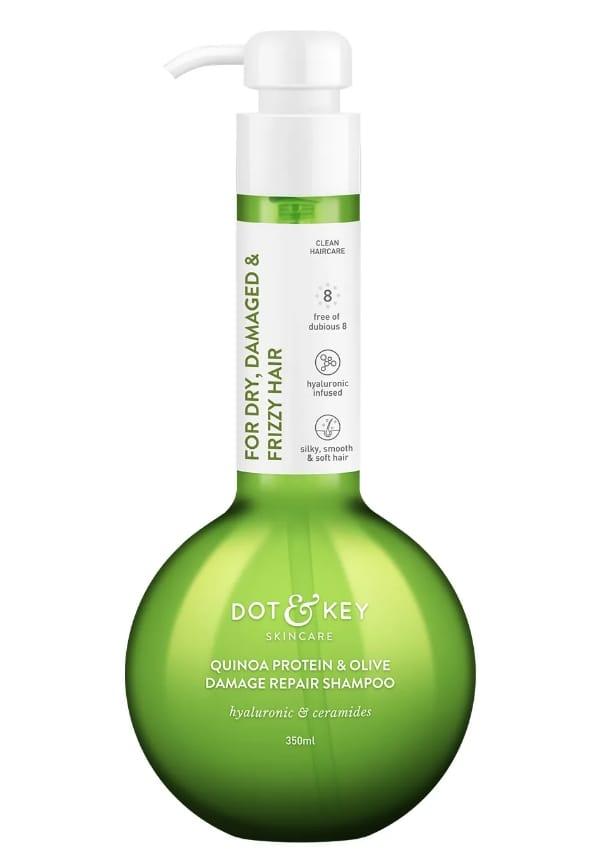
Quinoa Protein & Olive Damage Repair Shampoo
While repairing damage is important, preventing it in the first place is even better. Here's how to protect hair from rain and humidity before the weather has a chance to wreak havoc on your style.
Start with products that create a protective barrier. Look for leave-in treatments with silicones or natural oils that can repel moisture. Apply these to damp hair before styling, focusing on the areas that tend to get frizzy first—usually around your hairline and the ends.
Protective styling is your best friend on humid days. Braids, buns, and twists not only look chic but also keep your hair contained and less exposed to moisture. Plus, if you do get caught in the rain, these styles are much easier to fix than loose hair.
Keep a small hair emergency kit in your bag for those unexpected weather moments. A travel-size anti-frizz serum, some bobby pins, and a small comb can work wonders for quick touch-ups. Hair ties are also essential—sometimes the best solution is just pulling your hair back until you can properly deal with it later.
The right products can make all the difference when it comes to preventing hair frizz and managing humidity damage. Here's what to look for in your hair care arsenal.
Sulphate-free shampoos are gentler on damaged hair and won't strip away the natural oils your hair needs to stay healthy. Look for formulas with moisturising ingredients like glycerin or natural oils. These cleanse effectively without being harsh on already compromised hair.
A good conditioner is non-negotiable for damaged hair. Look for formulas with ingredients like ceramides, which help rebuild the hair's protective barrier, or panthenol, which adds moisture and shine. Apply conditioner from mid-length to ends, avoiding the roots to prevent greasiness.
Leave-in treatments are like insurance for your hair. They provide ongoing protection and moisture throughout the day. Choose lightweight formulas if you have fine hair, or richer creams if your hair is thick or very damaged. The key is finding something that protects without weighing your hair down.
Anti-humidity styling products can be game-changers. Look for serums or creams that specifically mention humidity protection or frizz control. These usually contain ingredients that form a protective film around each hair strand, keeping moisture out and smoothness in.
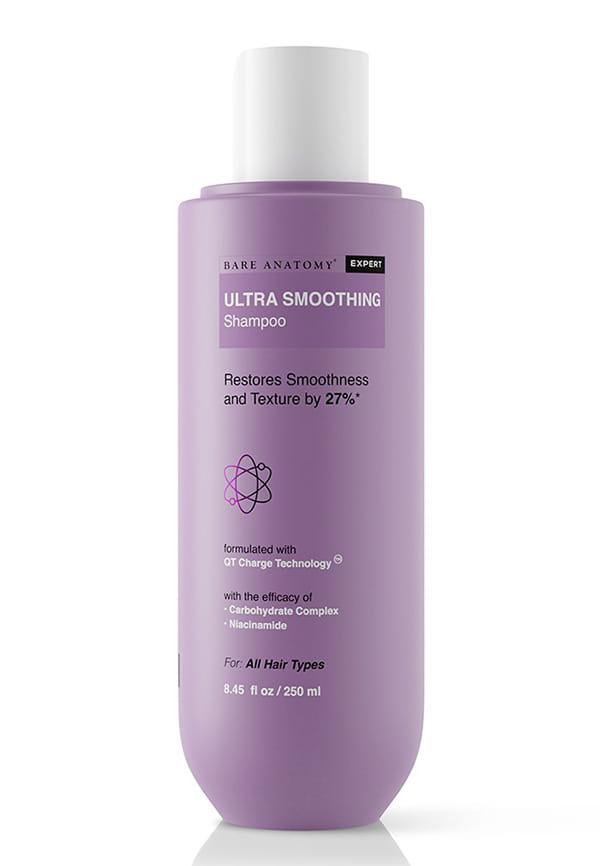
Expert Ultra Smoothing Shampoo To Restore Smoothness
Sometimes you need to call in the professionals, and sometimes a DIY approach works just fine. Here's how to figure out which route is right for your hair situation.
If your hair damage is severe—think major breakage, chemical damage, or hair that won't respond to at-home treatments—it might be time for professional help. Salon treatments like keratin smoothing or professional bond repair can provide more dramatic results than anything you can do at home.
For mild to moderate damage, plenty of effective moisture damage hair treatment options can be done at home. Natural ingredients like coconut oil, honey, and avocado can make surprisingly effective hair masks. The key is consistency—using these treatments regularly rather than expecting overnight miracles.
Most people start seeing improvements in their hair's texture and manageability within 2-4 weeks of consistent care. However, for significant repair of damaged hair, you're looking at about 6-8 weeks of regular treatments. Remember, hair grows slowly, so patience is key. The new growth will be healthier, while the existing damaged hair gradually improves with proper care.
Pure rainwater isn't inherently damaging, but it's rarely pure by the time it reaches your hair. Rainwater can pick up pollutants, dust, and other particles as it falls, which can build up on your hair over time. Additionally, rainwater tends to be slightly acidic, which can disrupt your hair's natural pH balance and lead to cuticle damage with repeated exposure.
Humidity frizz is usually temporary and goes away once your hair dries properly or you apply the right products. Actual damage persists even when your hair is completely dry and styled. If your hair feels rough, breaks easily, or has visible split ends, you're dealing with damage that needs repair rather than just temporary frizz.
Not necessarily. If the rain was light and your hair isn't too wet or dirty, you can often just let it air dry and style as usual. However, if you were caught in heavy rain or if the water felt particularly dirty, a gentle wash with a moisturising shampoo followed by a good conditioner can help remove any pollutants and restore your hair's balance.
Dealing with hair repair from rain damage doesn't have to be a constant battle. With the right combination of immediate care, long-term treatments, and prevention strategies, you can keep your hair healthy and manageable no matter what the weather throws at you. Remember, consistency is more important than perfection—small, regular efforts will give you better results than sporadic intensive treatments.
The key is understanding your hair's specific needs and responding accordingly. Some hair types are naturally more resistant to humidity, while others need extra protection and care. Pay attention to how your hair responds to different products and techniques, and don't be afraid to adjust your routine as needed.
Whether you're dealing with occasional frizz or more serious moisture damage, there are solutions that work. From simple changes like switching to a microfibre towel to more intensive treatments like weekly protein masks, every step you take towards better hair care will pay off in the long run. Your hair might not be able to control the weather, but with these strategies, you can definitely control how it responds to whatever nature sends your way. Not sure which products might work best for your specific hair concerns? Smytten offers trial-size versions of many haircare treatments and styling products—a smart way to test what works before investing in full-size bottles.
