Can You Mix Fragrance Combinations Safely? FAQ

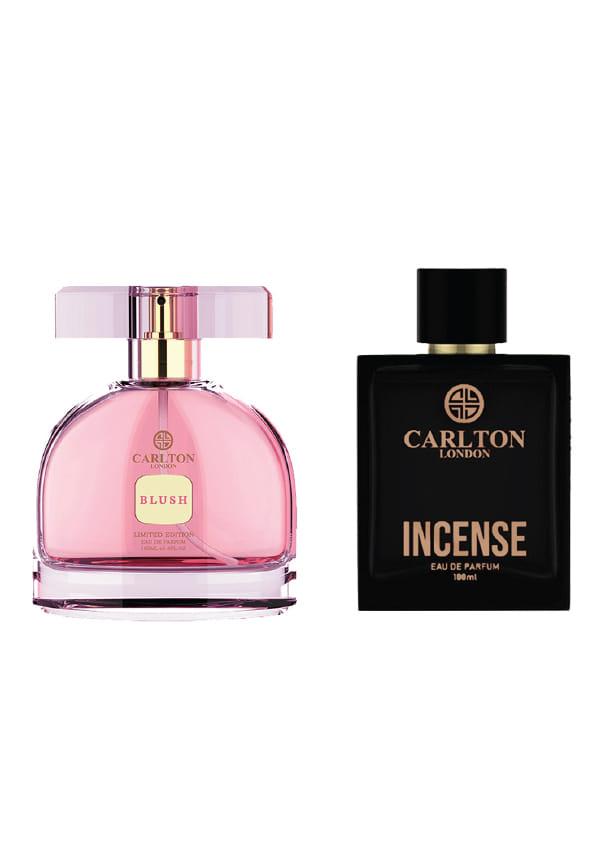
Combo Women Blush and Men Incense EDP Perfume
Amazing Fragrance, Very Good Product
 5
5“amazing fragrance. very good product”
Worthwhile Product
4“nice product worth it should try”
Excellent staying power
5“superb awesome Long lasting stay minimum 8 hour stay”
Ever wondered if you can mix fragrance combinations safely without creating a scent disaster? You're not alone. With so many gorgeous fragrances available, the temptation to layer and blend is real. But here's the thing—fragrance mixing isn't just about mixing your favourite scents together and hoping for the best. There's actually a science to safe scent blending that can help you create stunning custom combinations without overwhelming your senses or irritating your skin. Whether you're curious about perfume layering techniques or want to explore creating custom perfumes at home, understanding the basics of fragrance compatibility is your first step. At Smytten, we've seen countless fragrance enthusiasts discover their perfect scent combinations through trial and experimentation. Let's dive into everything you need to know about mixing fragrances safely, from essential oil combinations to professional perfume mixing guidelines that'll help you become your own scent curator.
TL;DR
Yes, you can mix fragrance combinations safely by following proper layering techniques and understanding scent compatibility
Start with 2 fragrances maximum, apply lighter scents first, and always test combinations on your skin before committing
Complementary fragrance families like citrus + woody or floral + musk work best together
Essential oil combinations require proper dilution ratios and patch testing for skin safety
Avoid mixing more than 3 fragrances at once and be mindful of concentration levels to prevent overwhelming results
Before diving into the fun part of creating your signature scent, let's talk safety. Fragrance mixing isn't just about what smells good together—it's about understanding how different compounds interact with each other and your skin. Think of it like cooking: you wouldn't randomly throw ingredients together without considering how they'll taste, right?
Safe fragrance combinations depend on several key factors that go beyond just personal preference. Chemical compatibility plays a huge role—some fragrance compounds can react with each other in unexpected ways, potentially causing skin irritation or creating unpleasant scent mutations.
Key safety considerations include:
Concentration levels of each fragrance (mixing two strong EDPs might be overwhelming)
Common allergenic ingredients like certain aldehydes or synthetic musks
Your skin's pH level and how it interacts with different fragrance families
The alcohol content in perfumes, which can affect how scents blend and develop
Here's where it gets interesting. Fragrances have different evaporation rates, which means they develop and fade at different speeds on your skin. Top notes (like citrus) evaporate quickly, middle notes (florals) stick around for a few hours, and base notes (woods, musks) can last all day.
When you're layering scents, you're essentially creating a new fragrance pyramid. The key is understanding how these different evaporation rates will interact throughout the day. A citrus-heavy perfume might play beautifully with a woody base for the first hour, but as the citrus fades, you might be left with an unbalanced combination.
Ready to start your fragrance layering journey? Let's begin with techniques that'll set you up for success. The beauty of fragrance layering lies in its flexibility—there's no single "right" way to do it, but there are definitely some guidelines that'll help you avoid common pitfalls.
Think of fragrance layering like getting dressed—you start with your foundation and build up. Always apply your lightest, most delicate scent first. This usually means starting with body mists or lighter EDTs before moving to stronger EDPs or parfums.
Application zones for layering:
Pulse points: wrists, behind ears, base of throat
Warm areas: inside elbows, behind knees
Hair and clothing (for lighter scents only)
Different zones for different fragrances to create a scent aura
Here's your golden rule: start with the 2-scent rule. Seriously, resist the urge to layer five different fragrances on your first attempt. Two complementary scents are much easier to balance and less likely to create olfactory chaos.
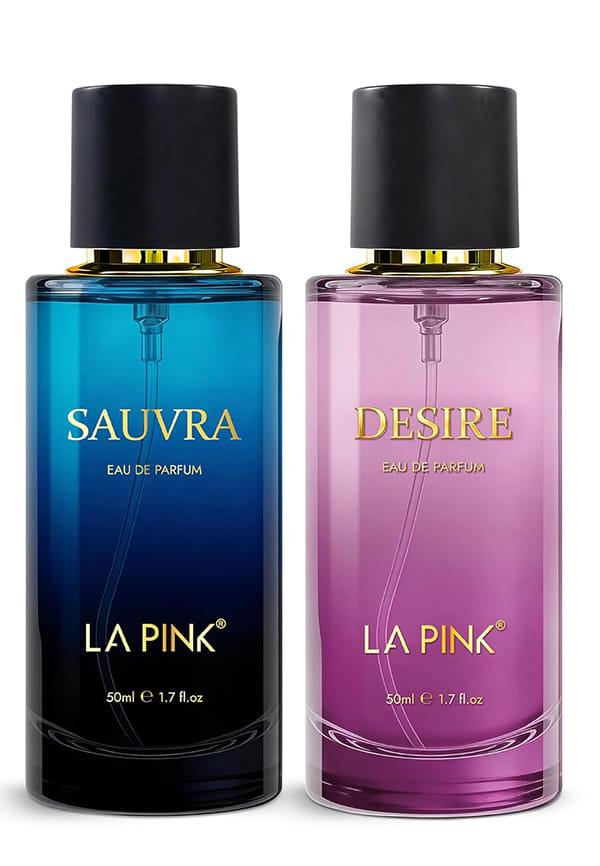
Desire & Sauvra EDP Combo
When mixing concentrations, try pairing an EDT with an EDP, or a body mist with a parfum. This creates natural balance—the lighter concentration won't compete with the stronger one, but will add subtle complexity to your overall scent profile.
Not all fragrance families play well together, but some are absolute dream teams. Here are some tried-and-tested combinations that work beautifully:
Citrus + Woody: Fresh bergamot with warm sandalwood creates perfect balance
Floral + Musk: Rose or jasmine with clean musk adds depth without heaviness
Fresh + Vanilla: Aquatic notes with vanilla create modern gourmand vibes
Oriental + Spicy: Amber with cinnamon or cardamom for exotic warmth
Want to take your fragrance mixing to the next level? Creating custom perfumes at home is totally doable with the right approach and safety measures. It's like being your own perfumer, minus the fancy lab equipment.
When working with essential oils, dilution is everything. Pure essential oils are incredibly concentrated and can cause skin irritation if used undiluted. The International Fragrance Association (IFRA) recommends specific maximum concentration percentages for common essential oils to ensure safety. For instance, a general guideline for body oils is 1-2% essential oil concentration, while for perfume sprays, it's typically 2-3%. Always use a carrier oil like jojoba or fractionated coconut oil, and start with single drops, building slowly to achieve your desired scent.
Safe dilution ratios:
For body oils: 1-2% essential oil concentration
For perfume sprays: 2-3% essential oil concentration
Always use a carrier oil like jojoba or fractionated coconut oil
Start with single drops and build slowly
Patience is key when developing custom fragrances. What smells amazing in the bottle might develop completely differently on your skin. Always do a patch test on your inner wrist and wait 24 hours to see how the scent evolves and whether you have any reactions.
Keep a fragrance journal—trust me on this one. Note down your combinations, ratios, and how they develop throughout the day. This becomes your personal fragrance bible for recreating successful blends and avoiding disasters.
Understanding which fragrances work well together can save you from some seriously questionable scent combinations. Think of this as your fragrance compatibility guide—like a dating app, but for perfumes.
Fragrance Type | Best Skin Type | Key Concerns | Price Range | Top Ingredients |
|---|---|---|---|---|
Plum Bodylovin' Hazelnut Eclair Body Mist | All skin types | Daily freshness, gourmand lovers | ₹300-500 | Hazelnut, vanilla, chocolate, musk |
Ossa Vision Flowers Body Spray | All skin types | Office wear, floral preference | ₹400-600 | Bergamot, jasmine, rose, sandalwood |
BELLA VITA Gourmet Vanilla Perfume | All skin types | Everyday gourmand, budget-friendly | ₹500-800 | Vanilla, musk, amber, woody notes |
The Love Co. Fall in Love Body Mist | All skin types | Romantic occasions, fruity-floral | ₹350-550 | Grapefruit, peach, jasmine, vanilla |
PROJEKT ALTERNATIVE Lost Leather Extrait | Normal to oily skin | Bold evening wear, niche fragrance | ₹1500-2500 | Leather, spices, amber, musk |
Complementary fragrance families are your best friends when starting your mixing journey. Citrus and woody combinations are practically foolproof—the freshness of bergamot or lemon pairs beautifully with the warmth of cedar or sandalwood.
Seasonal considerations matter too. Light, fresh combinations work brilliantly in summer (think citrus + aquatic), while warmer, spicier blends are perfect for winter months (vanilla + cinnamon, or amber + oudh).
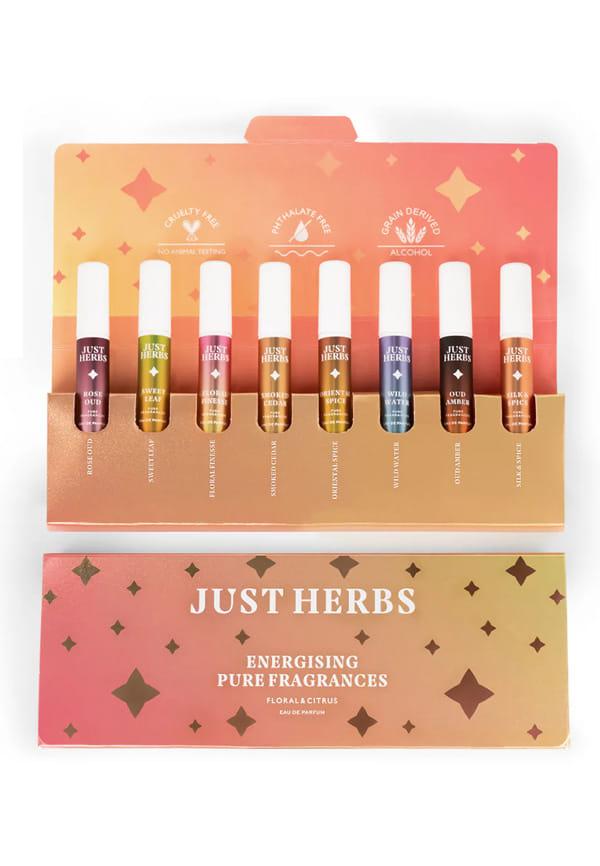
Energising Pure Fragrances Floral & Citrus Set of 8 EDP
Awesome & Lovely Fragrance
5“awesome &lovely fragrance go for it”
Wonderful Fragrance Kit
4“wonderful trial kit of floral and citrusfragrances”
Great Packaging
5“wow nice packaging i loved it 😀”
Here are the non-negotiable rules for safe fragrance mixing that'll keep you smelling amazing without any unwanted surprises:
Never layer more than 3 fragrances at once—seriously, your nose will thank you
Apply fragrances to different pulse points to create a scent gradient
Wait 5-10 minutes between applications to let each layer settle
If you have sensitive skin, stick to alcohol-free formulations or attars
Always test new combinations on a small skin area first
Let's talk about the fragrance mixing mistakes that can turn your scent dreams into olfactory nightmares. We've all been there—excited about a new combination only to realise it smells like a perfume shop exploded. Learning from these common pitfalls will save you time, money, and potentially some embarrassing moments.
Some fragrance combinations are just destined to clash, no matter how much you want them to work. Heavy oriental fragrances with fresh aquatic scents rarely play well together—it's like trying to mix oil and water. The warm, spicy complexity of oriental notes gets muddled by the clean simplicity of aquatic fragrances.
Avoid these problematic combinations:
Heavy gourmand (vanilla, chocolate) with sharp citrus—creates a confusing sweet-sour effect
Strong floral bouquets with marine/oceanic scents—the complexity gets lost
Multiple musk-heavy fragrances—can become overwhelming and animalic
Competing woody notes (sandalwood + cedar + oudh) without balancing elements
Made a mixing mistake? Don't panic. There are ways to salvage an overpowering or unbalanced fragrance combination. If you've applied too much or created an unpleasant blend, try dabbing (not rubbing) the area with a cotton pad soaked in unscented oil to dilute the intensity.
For future reference, if a combination isn't working, it's usually because one element is overpowering the others. Try reducing the stronger fragrance and increasing the lighter one, or add a neutral base like a clean musk to balance things out.
Ready to level up your fragrance mixing game? Advanced techniques involve understanding the intricate dance between different perfume notes and how they evolve throughout the day. This is where fragrance mixing becomes an art form rather than just a fun experiment.
Professional perfumers follow strict guidelines when creating new fragrances, and you can apply these same principles at home. The International Fragrance Association (IFRA) sets safety standards for fragrance ingredients, including maximum concentration levels for different compounds. When creating your own blends, research any ingredients you're using. Some essential oils, like bergamot, can cause photosensitivity, making your skin more prone to sun damage. Others, like cinnamon or clove, can be irritating in high concentrations. Always ensure your fragrance creation safety adheres to IFRA guidelines.
Your fragrance layering strategy should adapt to different seasons and occasions. Summer calls for lighter, more refreshing combinations that won't become overwhelming in heat and humidity. Try layering a citrus body mist with a light floral EDT for daytime freshness that won't compete with the weather.
Winter allows for richer, more complex combinations. This is when you can experiment with layering vanilla-based fragrances with spicy or woody elements. The cooler air helps carry these heavier scents without them becoming cloying.
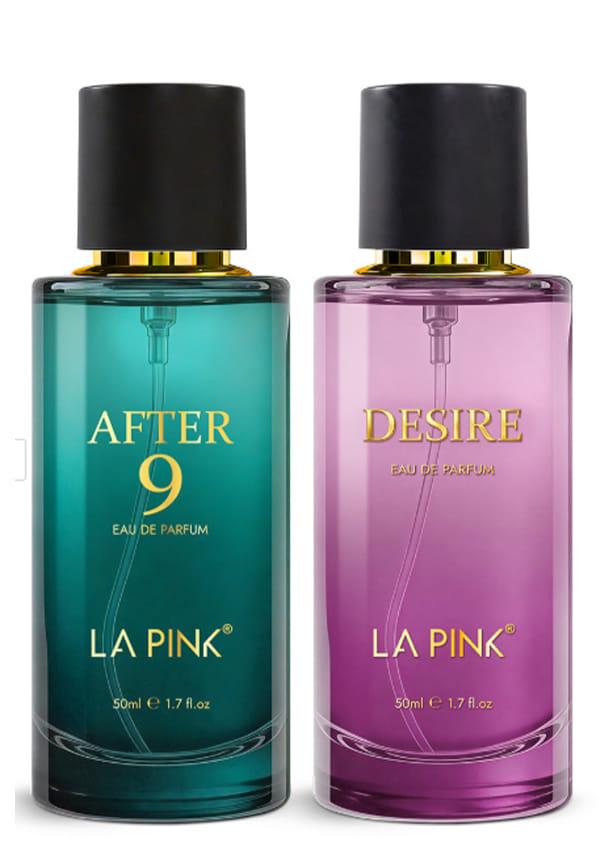
After 9 & Desire Unisex EDP Combo
Absolutely! Mixing two fragrances is not only safe but often creates beautiful, unique scent combinations. The key is choosing complementary fragrance families and applying them properly. Start with lighter concentrations and test the combination on your skin before committing to a full application. Always ensure neither fragrance contains ingredients you're allergic to.
Three perfumes can work, but it's definitely pushing the limit. Most fragrance experts recommend sticking to 2-3 maximum to avoid creating an overwhelming or muddled scent. If you do layer three fragrances, make sure one is very light (like a body mist), one is medium intensity, and one provides the base. The key is balance—each fragrance should complement, not compete with, the others.
While technically possible, mixing perfumes directly in a bottle isn't recommended. Different fragrances have varying chemical compositions that might not be stable when combined long-term. This can lead to separation, colour changes, or altered scent profiles. Instead, layer them on your skin or create custom blends using individual fragrance oils with proper dilution ratios.
Test compatibility by spraying each fragrance on different wrists and bringing them close together to smell the combination. You can also spray them on separate cotton pads and hold them together. Look for fragrance families that traditionally work well together—citrus with woody, floral with musk, or gourmand with vanilla. Available on Smytten, you can try mini versions of different fragrances to test combinations before committing to full sizes.
Start simple with just two complementary fragrances from the same brand or fragrance family. Apply the lighter scent first, wait a few minutes, then apply the stronger one. Begin with small amounts—you can always add more, but it's harder to remove excess. Choose different pulse points for each fragrance to create a subtle scent gradient rather than applying both to the same spot.
Be cautious with photosensitive ingredients like bergamot or citrus oils if you'll be in the sun. Avoid mixing multiple fragrances containing strong aldehydes or synthetic musks, as these can become overwhelming. If you have sensitive skin, steer clear of fragrances with high alcohol content or known allergens like certain floral absolutes. Always patch test new combinations, especially when using essential oils or niche fragrances with unique compositions.
Mixing fragrance combinations safely is absolutely achievable with the right knowledge and approach. Start with understanding fragrance families and how they complement each other—citrus with woody, floral with musk, and gourmand with vanilla are tried-and-tested winning combinations. Always begin with just two fragrances, apply the lighter scent first, and test combinations on your skin before committing to a full application.
Remember that fragrance layering is as much about personal preference as it is about technical compatibility. What smells amazing on your friend might not work the same way on your skin due to individual body chemistry. Keep a fragrance journal to track successful combinations and ratios, and don't be afraid to experiment with different application techniques and timing.
Safety should always be your priority—patch test new combinations, be mindful of concentration levels, and research any ingredients you're unsure about. With patience and practice, you'll develop an intuitive understanding of which scents work well together and how to create your own signature fragrance combinations that are uniquely you.
Fragrance mixing opens up a world of endless scent possibilities, and there's never been a better time to explore this creative art form. Whether you're drawn to fresh citrus combinations, warm gourmand blends, or sophisticated floral layering, the key is having access to quality fragrances that you can experiment with confidently. Smytten makes this exploration both affordable and exciting through its curated trial packs, letting you discover mini-sized products from over 1,500 trusted fragrance brands. With Trial Points, you can get up to 8 minis for just ₹249, plus enjoy 100% cashback on these trials, making it the perfect platform to test fragrance combinations before committing to full-size purchases. From fresh body mists to concentrated parfums, Smytten's extensive fragrance collection available across 27,000+ pincodes means you can trial and shop authentic, brand-verified minis from the comfort of your home. After all, why settle for just one signature scent when you can #TryItAll and create your own unique fragrance story?
