How to Choose the Perfect Curtains for Your Home: The Complete Room-by-Room Guide

-f5b9cd56-74b0-4bca-a50d-e2744e3a3f7a.png&w=3840&q=75)
You've painted the walls the perfect shade, found the sofa you've been searching for, and arranged the furniture exactly right. And then you hang the wrong curtains — too short, too thin, the wrong colour — and somehow the entire room looks off without you being able to immediately explain why. Few décor decisions have as much quiet power over how a room looks and feels as curtains, and yet most people choose them quickly, almost as an afterthought, based on whatever catches their eye first in the store.
Curtains for home are doing far more work than they appear to be. They control light, manage privacy, regulate temperature, absorb sound, and — perhaps most significantly — set the visual tone for an entire room through their colour, fabric, pattern, and the way they fall from ceiling to floor. A room with well-chosen curtains feels finished, intentional, and effortlessly put together. A room with poorly chosen ones feels incomplete regardless of everything else done right.
This guide covers everything you need to know to get it right — fabric, colour, length, lining, and how to match curtains to every room in your home.
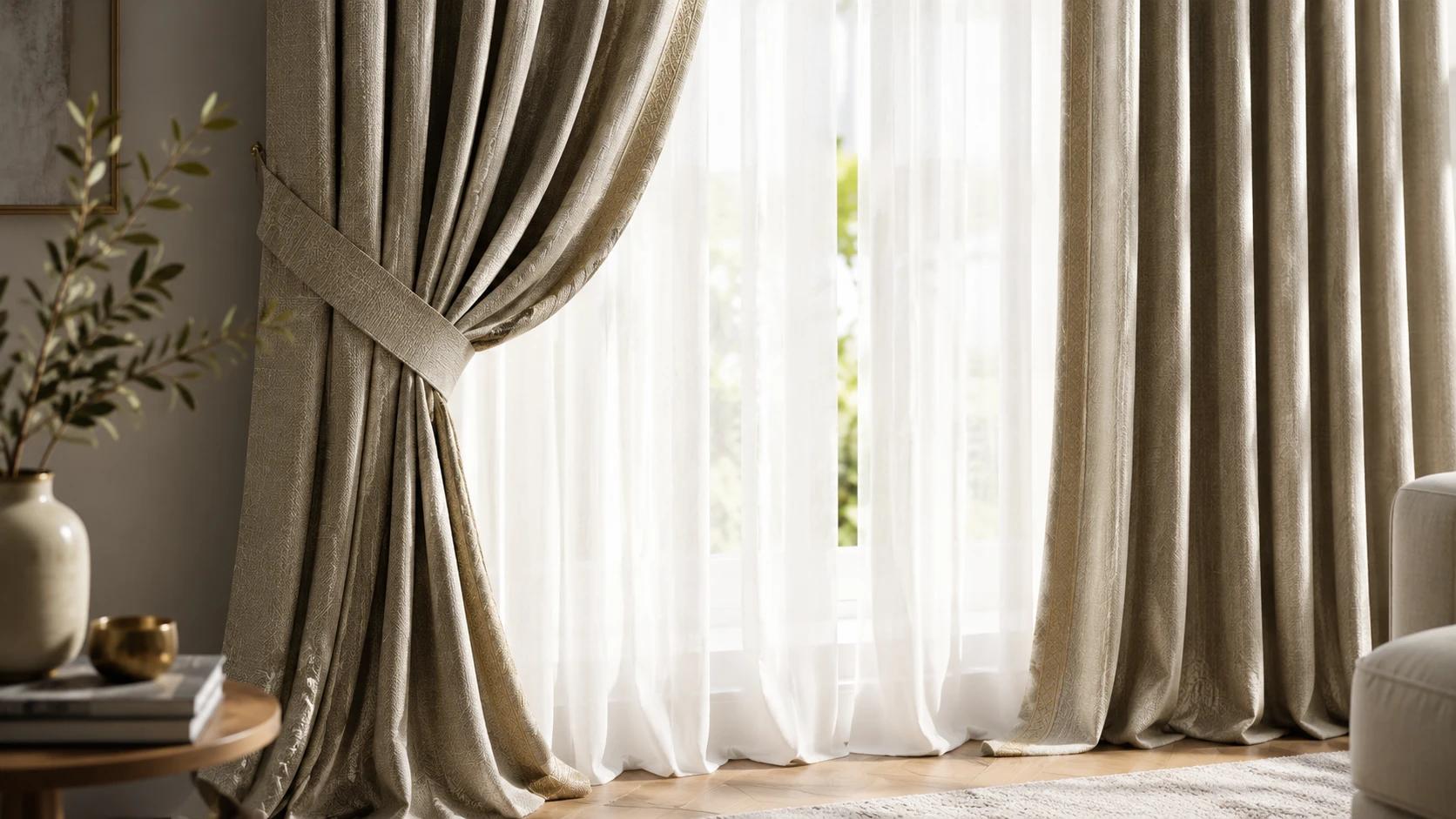
Walk into any beautifully decorated room and look at the windows. The curtains will almost certainly be floor-length, hung high above the window frame, in a fabric that either puddles slightly or breaks cleanly at the floor. They will be lined. They will be in a colour or pattern that connects to at least two other elements in the room. And they will make the windows — and therefore the walls, and therefore the entire room — look larger, taller, and more considered than they actually are.
This is the transformative power of correctly chosen and correctly hung curtains for home — and it works equally in reverse. Curtains hung at window frame height rather than ceiling height make rooms feel shorter. Curtains that don't reach the floor look unfinished. Sheer, unlined curtains in a bedroom destroy sleep quality. Curtains in the wrong colour visually shrink a room or clash with everything around them.
The good news is that once you understand the principles — fabric, function, length, and colour — making the right choice becomes considerably more straightforward.
Fabric is the most important curtain decision you will make, because it determines everything else — how the curtain falls, how much light it filters, how it behaves across seasons, and how long it lasts.
Cotton
Cotton curtains are the most versatile and widely available option for Indian homes. They drape cleanly, come in an enormous range of colours and prints, are relatively easy to wash, and suit most rooms and décor styles. The limitation is that cotton alone provides moderate light filtering at best — unlined cotton curtains in a bedroom will let in significant morning light. Cotton works beautifully in living rooms, dining rooms, and children's rooms where full blackout isn't required.
Linen
Linen curtains bring a relaxed, natural elegance that suits both contemporary and traditional Indian interiors. They filter light beautifully — creating the warm, diffused glow that makes rooms feel effortlessly inviting during the day — and improve with age and washing, developing a softness that new linen lacks. Linen wrinkles more readily than other fabrics, which some people consider part of its organic charm and others find frustrating. For living rooms and dining spaces where a relaxed, natural aesthetic is the goal, linen is an excellent choice.
-e3eacf3a-6d5e-4077-8155-b6d383dc377f.png&w=3840&q=75)
Velvet
Velvet curtains are statement-makers — rich, dramatic, and immediately luxurious in appearance. Beyond aesthetics, velvet is one of the most functionally effective curtain fabrics, providing significant light blocking, insulation, and sound absorption. In Indian homes, velvet curtains work particularly well in bedrooms, home theatres, and formal living rooms where a sense of drama and depth is appropriate. They require more careful maintenance than cotton or linen and are better suited to air-conditioned rooms given their insulating properties.
Sheer fabrics
Sheer curtains — voile, organza, net — diffuse light without blocking it, providing a degree of daytime privacy while maintaining a bright, airy feel. In Indian homes, sheers work most effectively as a layer beneath heavier curtains rather than as a standalone window treatment. This double-layer approach — sheers for daytime use, heavier curtains drawn in the evening or when full privacy is needed — is both practically versatile and aesthetically sophisticated.
Silk and silk-look fabrics
Silk curtains bring an undeniable opulence and work particularly well in formal drawing rooms and master bedrooms where the budget supports them. Natural silk, however, is vulnerable to sun damage and fading — a significant practical concern given India's intense sunlight. High-quality polyester silk-look fabrics have improved dramatically and offer similar visual impact with considerably better durability and easier maintenance at a fraction of the cost.
Lining is the single most overlooked aspect of curtain buying in Indian homes — and arguably the most impactful. An unlined curtain, regardless of how beautiful the fabric, will always look slightly flat, fall less elegantly, let in more light than intended, and wear out faster.
A standard cotton lining adds body and weight that makes curtains fall in the deep, even folds that characterise well-dressed windows. It protects the face fabric from sun damage, extending curtain life significantly in India's intense sunlight. It improves light filtering meaningfully and adds a layer of privacy.
Blackout lining takes this further — blocking nearly all incoming light, making it essential for bedrooms, particularly in homes facing east or with streetlight exposure at night. The difference in sleep quality between a bedroom with properly blackout-lined curtains and one without is dramatic and immediate, particularly for children and light sleepers.
Thermal lining adds insulation — reducing heat gain in summer and heat loss in winter — making it particularly valuable for homes in extreme climate zones and for rooms that are difficult and expensive to keep cool.
When buying curtains for home, always factor in the cost of lining as part of the total window treatment budget. It is rarely an optional extra.
-5f919126-254f-4b06-a30b-d7d6700d6cf1.png&w=3840&q=75)
The most common curtain mistake in Indian homes — across every price point and style — is incorrect length. Curtains that hover above the floor, stop at the windowsill, or hang at window frame height rather than ceiling height immediately mark a room as unfinished, regardless of the quality of everything else.
The floor-length rule
For virtually every room in your home, curtains should reach the floor. There are three accepted floor-length treatments: breaking (the curtain extends one to two centimetres past the floor, creating a slight break), barely touching (the curtain hem meets the floor exactly), and puddling (the curtain extends ten to twenty centimetres onto the floor, creating a deliberately luxurious pooled effect). Breaking is the most practical and forgiving for most homes. Puddling is dramatic and beautiful but requires more fabric and more frequent laundering.
Hang them high
Mount curtain rods as close to the ceiling as practically possible — ideally within ten to fifteen centimetres of the ceiling line, regardless of where the actual window frame sits. This visual trick makes ceilings appear higher, windows appear larger, and rooms feel more spacious. It is one of the most impactful and least expensive improvements you can make to how a room feels.
Width matters as much as length
Curtains should be generous in width — approximately two to two and a half times the width of the window for a full, gathered appearance when open. Curtains that are too narrow for their window look skimpy and flat, and fail to frame the window effectively. When in doubt, go wider.
Living room
The living room is where curtains have the most visual impact and where the investment is most justified. Floor-length curtains in a quality fabric — linen, cotton, or velvet depending on the aesthetic — hung at ceiling height create the foundation of a well-dressed room. Colour here should connect to the room's existing palette — either harmonising with the dominant colour or providing a considered contrast. Pattern in the living room works well when the rest of the furnishings are relatively neutral; solid curtains work better in rooms with patterned sofas, rugs, or wallpaper.
Bedroom
The bedroom prioritises function alongside aesthetics. Blackout lining is non-negotiable for quality sleep. Fabric should feel calm and restful — heavy cotton, linen, or velvet in muted, soft tones rather than stimulating patterns or bright colours. Floor-length curtains in the bedroom also serve a practical insulating function, keeping rooms cooler in summer and warmer in winter.
Kitchen
Full floor-length curtains are impractical in kitchens where they would trail across worktops and accumulate cooking residue. Café curtains — covering the lower half of the window only — provide privacy while allowing light in from above. Roman blinds in a washable fabric are an excellent kitchen alternative. Fabric choice should prioritise easy cleaning — cotton and polyester blends outperform linen and velvet in the kitchen context.
-c513d09b-8fe5-456d-b037-03e4ac182d84.png&w=3840&q=75)
Children's room
Children's rooms benefit from blackout lining to support daytime naps and consistent sleep routines. Fabric and colour choices can be playful — this is one room where pattern and colour can be expressive without overwhelming the space. Practical considerations matter: machine-washable fabrics, secure rod mounting, and curtains without long trailing cords that pose safety risks for young children.
Bathroom
Privacy is the primary function of bathroom curtains. Moisture-resistant fabrics — polyester, certain treated cottons — are essential in a bathroom environment. Café curtains or small valances work well at small bathroom windows, providing privacy without overwhelming the space. Keep fabric choices simple and colours neutral to avoid the bathroom feeling cluttered.
Colour is where most people feel most uncertain about curtains for home — and where a few simple principles eliminate most of the guesswork.
Curtains in the same colour family as the walls, a shade or two deeper, create a seamless, enveloping look that makes rooms feel larger and more cohesive. This tonal approach is the safest and most consistently successful colour strategy for curtains in any room.
Curtains in a contrasting colour — a deep teal in a white room, terracotta in a grey room — create a focal point and inject personality. This approach works best when the curtain colour appears elsewhere in the room, even in small amounts — a cushion, a rug, artwork — to create visual connection rather than visual collision.
Pattern works when it's scaled to the room. Large-scale prints in small rooms overwhelm the space. Small, delicate patterns in large rooms disappear. As a general principle, pattern on curtains works most elegantly when the remaining soft furnishings — cushions, rugs — are in solid colours drawn from the curtain's palette.
How do I measure for curtains correctly? Measure from the curtain rod — positioned as close to the ceiling as possible — to the floor. This is your drop measurement. For width, measure the width of the window and multiply by two to two and a half for adequate fullness. Always measure after installing the rod, not before, to ensure accuracy.
Should curtains match the walls or contrast with them? Both approaches work — the choice depends on the effect you want. Matching creates a calm, cohesive, space-expanding look. Contrasting creates drama, personality, and visual interest. Avoid curtains that are neither clearly matching nor clearly contrasting — an ambiguous in-between reads as an accident rather than a choice.
How often should curtains be washed? Most curtain fabrics benefit from washing every three to six months. In Indian cities with high pollution and dust levels, more frequent cleaning — particularly for lighter-coloured fabrics — maintains both appearance and air quality. Always check care labels — many lined and heavyweight curtains require dry cleaning rather than machine washing.
Are readymade curtains or custom curtains better? Readymade curtains offer convenience and lower cost but are limited to standard lengths and widths that may not suit every window. Custom curtains are made to your exact measurements and fabric choice, producing a far more tailored result — particularly valuable for non-standard window sizes, high ceilings, and statement rooms where the investment is justified.
What curtain rod should I use? The rod should extend fifteen to twenty centimetres beyond the window frame on each side, allowing curtains to be pushed fully clear of the glass when open and maximising natural light. Heavier fabrics require sturdier rods and secure wall mounting — always check that the rod and its fixings can support the weight of the curtains you're hanging.
