Which Indian Spices Are Best for Your Health - And How Much Do You Actually Need?

-c513d09b-8fe5-456d-b037-03e4ac182d84.png&w=3840&q=75)
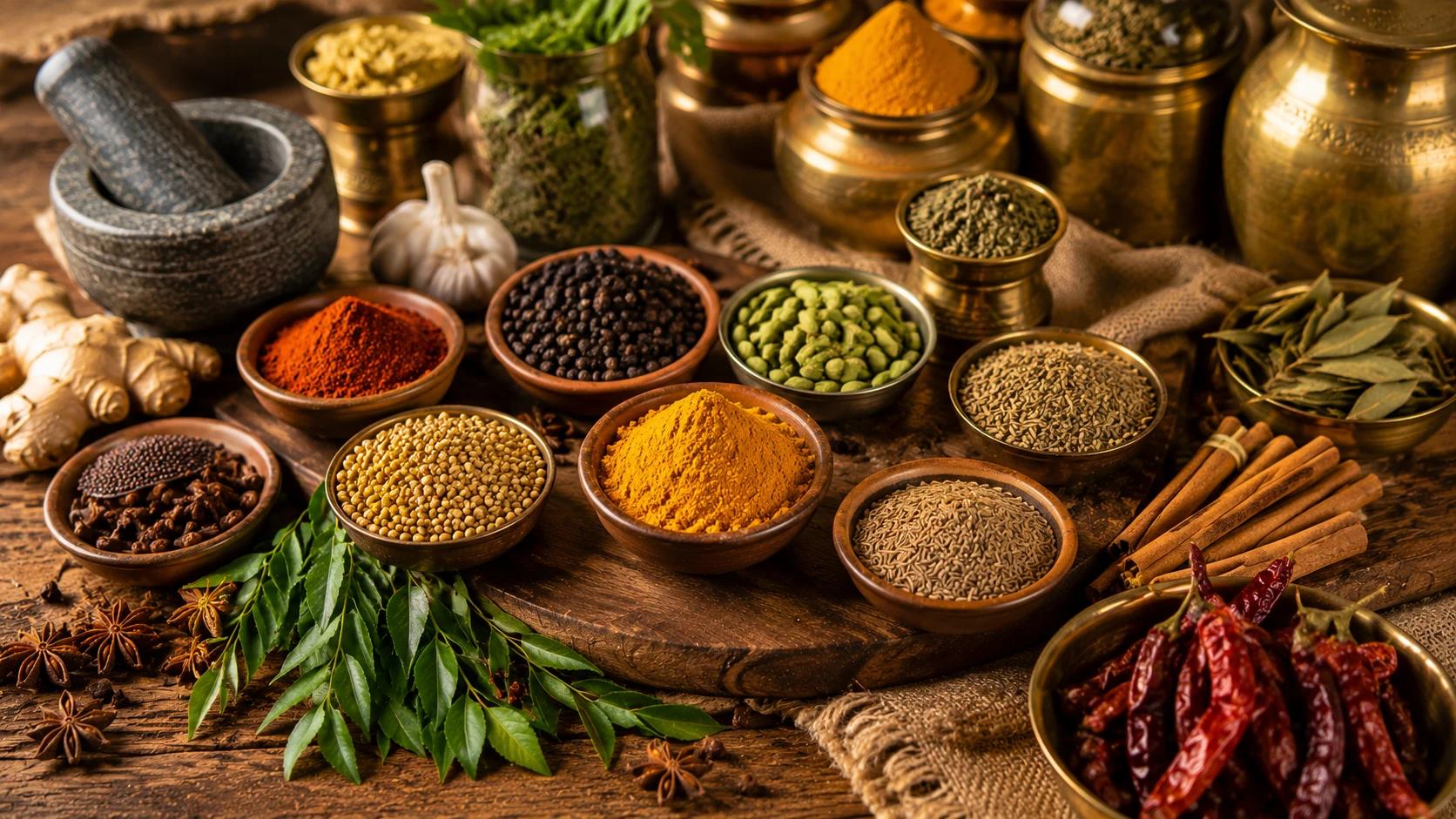
Every Indian kitchen has one — that round steel dabba with its smaller containers of haldi, jeera, dhania, rai, and half a dozen other spices that go into virtually every meal without a second thought about what they're doing beyond flavour. What most people don't realise is that the masala dabba sitting on their kitchen shelf contains some of the most thoroughly researched, biologically active, health-supporting compounds in the natural world.
Spice health is not an alternative medicine concept or a wellness trend. It is the convergence of thousands of years of Ayurvedic practice with an increasingly robust body of modern nutritional and pharmacological research confirming what Indian cooking has always known intuitively — that food prepared with the right spices does something beyond nourishing. It heals, protects, and supports the body in ways that modern medicine is still working to fully understand.
Spices are, fundamentally, concentrated plant compounds. The colours, aromas, and flavours that make Indian cooking unmistakable are produced by phytochemicals — biologically active molecules including polyphenols, flavonoids, terpenoids, and alkaloids — that plants produce as protective mechanisms against pests, disease, and environmental stress. When consumed, these compounds interact with human biology in ways that are anti-inflammatory, antioxidant, antimicrobial, and in many cases directly therapeutic.
The quantities consumed in cooking are small — a teaspoon of turmeric, half a teaspoon of cumin, a few cardamom pods — but consumed daily across decades, their cumulative contribution to health is significant. Traditional Indian communities that have eaten this way for generations show patterns of chronic disease incidence that researchers are increasingly attributing, at least in part, to the protective effects of regular spice consumption.
-95d4a412-2e2e-44f2-a049-fbad227a7131.png&w=3840&q=75)
Turmeric — the golden standard
Curcumin — turmeric's primary active compound — is among the most extensively studied natural health compounds in existence. Its anti-inflammatory properties rival certain pharmaceutical anti-inflammatories in laboratory studies, working through multiple inflammatory pathways simultaneously. Chronic inflammation is implicated in the development of heart disease, type 2 diabetes, cancer, Alzheimer's disease, and virtually every other major chronic condition — making curcumin's anti-inflammatory action broadly relevant to long-term health.
Curcumin also has direct antioxidant properties, supports brain health through increased production of brain-derived neurotrophic factor, shows promising anti-cancer properties in early research, and supports liver function. The critical practical point is bioavailability — curcumin is poorly absorbed on its own but absorption increases dramatically when consumed with black pepper (piperine enhances absorption by up to 2,000%) and with fat. Traditional Indian cooking — turmeric cooked in oil with a pinch of black pepper — delivers curcumin in its most bioavailable form without any deliberate supplementation.
Cumin (jeera) — the digestive anchor
Jeera is present in virtually every Indian dish for reasons that go far beyond its distinctive flavour. Cumin stimulates the secretion of digestive enzymes, improves gut motility, reduces bloating and gas, and has antimicrobial properties that support a healthy gut environment. Research also shows promising effects on blood sugar regulation — cumin consumption is associated with improved insulin sensitivity — and on cholesterol levels. Jeera water — overnight-soaked cumin seeds in warm water, consumed first thing in the morning — is one of the most widely practised traditional health habits in Indian households, with genuine digestive benefit.
Black pepper (kali mirch) — the bioavailability booster
Black pepper's primary contribution to spice health is piperine — a compound that dramatically increases the absorption of other nutrients and health compounds, most notably curcumin from turmeric. Beyond this synergistic role, piperine has its own anti-inflammatory and antioxidant properties, supports digestive enzyme activity, has shown anti-cancer properties in laboratory research, and may support brain health by inhibiting enzymes that break down neurotransmitters. The combination of turmeric and black pepper in Indian cooking is not coincidental — it is a culinary tradition that happens to be pharmacologically sophisticated.
Cinnamon (dalchini) — the blood sugar regulator
-13c4212e-778f-453c-9be4-72c7d9bd7907.png&w=3840&q=75)
Cinnamon has among the strongest evidence of any spice for a specific therapeutic health effect — blood sugar regulation. Multiple studies show that cinnamon consumption improves insulin sensitivity and reduces fasting blood sugar levels in people with type 2 diabetes and insulin resistance. For India — which carries the world's largest burden of type 2 diabetes — this makes cinnamon one of the most practically relevant spices in the health conversation. Adding cinnamon to chai, oatmeal, or cooking is a genuinely evidence-supported dietary habit for blood sugar management alongside conventional treatment.
Cardamom (elaichi) — the heart and breath supporter
Cardamom is rich in antioxidants and shows consistent blood pressure-lowering effects in clinical studies — making it relevant for India's significant hypertension burden. It supports digestive health, has antimicrobial properties relevant to oral health, and contains compounds that show anti-inflammatory effects. Cardamom in chai, rice dishes, and desserts delivers these benefits in quantities meaningful enough to contribute to cardiovascular health over time.
Fenugreek (methi) — the blood sugar and cholesterol ally
Methi seeds contain soluble fibre that slows glucose absorption, reduces post-meal blood sugar spikes, and has been shown to meaningfully reduce both blood sugar and LDL cholesterol in people with diabetes. Soaked methi seeds consumed first thing in the morning — one of the most common traditional Indian health practices — have genuine clinical evidence supporting their use for blood sugar and lipid management.
Ginger (adrak) — the inflammation fighter
Ginger's gingerols and shogaols are among the most potent natural anti-inflammatory compounds available. Research supports ginger's effectiveness for reducing muscle soreness after exercise, managing nausea including pregnancy-related morning sickness and chemotherapy-induced nausea, reducing markers of inflammation in osteoarthritis, and supporting digestive health through improved motility and reduced gas. Fresh ginger in cooking, ginger chai, and warm ginger water deliver these benefits reliably.
-e6a7f223-6da1-4801-8037-c8b3b35a046a.png&w=3840&q=75)
The health benefits of spices are best accessed through daily cooking rather than periodic supplementation. Cooking spices in oil — the tadka technique foundational to Indian cooking — releases and concentrates fat-soluble phytochemicals, improving both absorption and flavour. Combining spices — turmeric with black pepper, cumin with coriander — produces synergistic effects where compounds work together more effectively than individually.
Using whole spices freshly ground where possible rather than pre-ground powders preserves volatile compounds that degrade quickly after grinding. Storing spices away from heat, light, and moisture extends their potency. And rotating through a wide variety of spices rather than relying on the same three or four ensures exposure to the broadest range of beneficial compounds.
The golden milk trend — warm milk with turmeric, black pepper, ginger, and cinnamon — that swept Western wellness circles is, of course, a simplified version of the haldi doodh that Indian grandmothers have been prescribing for centuries. The tradition was always right. The science is now confirming it.
Should I take spice supplements instead of using spices in cooking? For most people, cooking with spices daily delivers meaningful health benefits through consistent, bioavailable doses alongside complementary compounds in the whole food. High-dose curcumin or other spice supplements may be appropriate for specific therapeutic purposes but should be discussed with a doctor — some spice compounds interact with medications at supplemental doses.
How much turmeric should I use daily for health benefits? Research showing health benefits typically uses one to three grams of curcumin daily — equivalent to roughly one to two teaspoons of turmeric powder. This is achievable through daily cooking. Remember that absorption requires black pepper and fat to be present simultaneously.
Are there any spices that can be harmful in large quantities? Yes. Cinnamon in very large quantities — particularly cassia cinnamon, the most common commercial variety — contains coumarin which can affect liver function. Nutmeg in large amounts is toxic. Fenugreek in very high doses can lower blood sugar excessively in people on diabetes medication. Spices used in cooking quantities are safe; concentrated supplemental doses require more care.
