How Hormones Affect Skin: Understanding Your Skin Changes

 30 ml
30 mlPeptide Serum | Anti-Aging for Fine Lines & Wrinkles | Collagen Boosting | 5% Amino Peptides + Hyaluronic Acid | For All Skin Types | 30ml
Ever noticed how your skin seems to have a mind of its own? One week you're glowing, the next you're dealing with unexpected breakouts or dryness that came from nowhere. Real talk: your hormones are likely the puppet masters behind these frustrating skin changes. Understanding how hormones affect skin isn't just fascinating science—it's the key to finally making sense of your complexion's unpredictable behaviour and finding solutions that actually work.
Think of hormones as your body's internal messaging system—chemical messengers that travel through your bloodstream, telling different organs what to do and when to do it. Your skin, being the body's largest organ, is incredibly hormone-responsive, which explains why it reacts so dramatically to hormonal shifts.
These powerful chemicals regulate everything from oil production to collagen synthesis and cell turnover. When your skin health hormones are balanced, you might notice that coveted natural glow. But when they're out of whack? That's when you see breakouts, dryness, sensitivity, or premature ageing creeping in.
Your skin's hormone receptors are particularly concentrated in your sebaceous glands (oil producers) and hair follicles, which is why hormonal acne tends to cluster around your jawline, chin, and lower cheeks. The endocrine system doesn't just influence how much oil your skin produces—it also affects your skin barrier function, inflammation response, and even how quickly your skin heals from damage.
Not all hormones affect your skin equally. Some are major players, whilst others work behind the scenes. Let's break down the key hormones that have the most dramatic impact on your complexion.
Estrogen has earned its reputation as the beauty hormone for good reason. This hormone is your skin's best friend, promoting collagen production, maintaining skin thickness, and keeping your complexion plump and hydrated. When estrogen levels are optimal, your skin tends to look its most radiant.
Estrogen works by stimulating hyaluronic acid production, which helps your skin retain moisture naturally. It also promotes blood flow to the skin, giving you that healthy, rosy glow. During your reproductive years, when estrogen levels are typically higher, your skin often looks its best. This is why many women notice significant skin changes hormones bring during menopause, when estrogen levels drop dramatically.
Whilst testosterone is often thought of as a male hormone, women produce it too—just in smaller amounts. Testosterone skin effects are primarily related to increased sebum production. When testosterone levels rise, your sebaceous glands go into overdrive, producing more oil than your pores can handle.
This excess oil, combined with dead skin cells, creates the perfect environment for acne-causing bacteria to thrive. Testosterone also affects pore size, making them appear larger when levels are elevated. This is why many people experience breakouts during puberty, when testosterone surges, and why some women notice chin and jawline acne around ovulation or before their period.
Progesterone is the hormone that rises during the second half of your menstrual cycle, and it's often the culprit behind those pre-period breakouts. This hormone can cause your skin to swell slightly, which compresses pores and makes it harder for oil to flow freely to the surface.
Additionally, progesterone can increase oil production and make your skin more sensitive to other acne triggers. Many women notice their skin becomes more reactive to products or environmental factors during the luteal phase of their cycle, when progesterone levels peak.
Cortisol, your primary stress hormone, can wreak havoc on your skin when levels remain elevated. Chronic stress leads to persistent cortisol elevation, which triggers hormones and skin inflammation throughout your body. This inflammation can manifest as acne, eczema flares, or general skin sensitivity.
Cortisol also impairs your skin's barrier function, making it less effective at retaining moisture and protecting against environmental damage. It can slow down skin healing and regeneration, which is why stressed skin often looks dull and takes longer to recover from breakouts or irritation.
Understanding the specific ways hormone imbalance skin issues manifest can help you identify whether your skin concerns are hormonally driven. Here are the most common patterns to watch for.
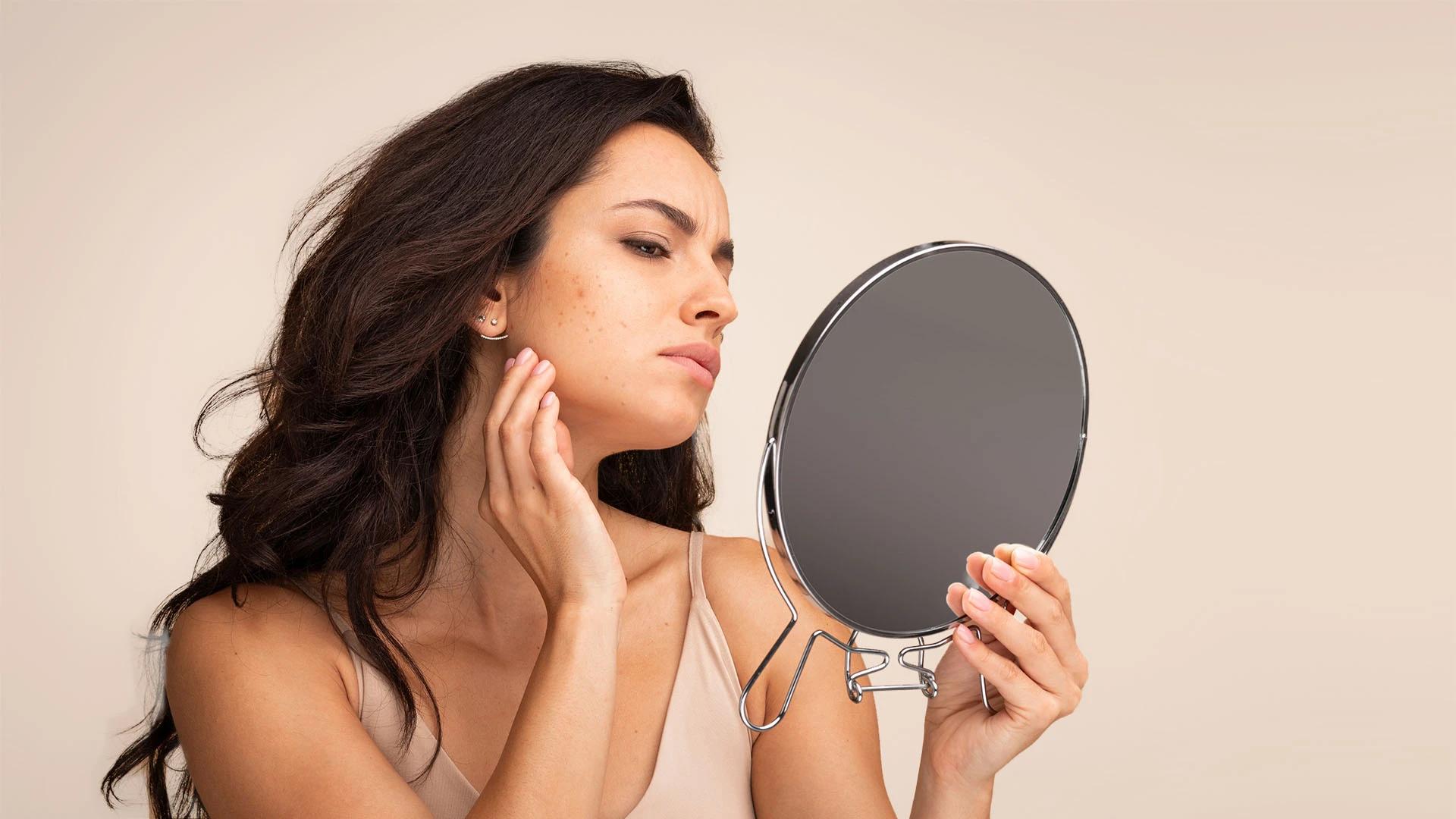
Hormonal acne has distinct characteristics that set it apart from other types of breakouts. It typically appears along the jawline, chin, and lower cheeks—areas with the highest concentration of hormone-sensitive oil glands. These breakouts often consist of deep, cystic bumps that are painful to touch and take longer to heal than surface-level spots.
The timing is another telltale sign. If your breakouts follow a monthly pattern, appearing roughly the same time each cycle, hormones are likely the primary cause. Adult women often experience this type of acne even if they had clear skin as teenagers, as adult hormone related skin problems can develop due to stress, dietary changes, or natural hormonal fluctuations.
Acne isn't the only way hormones affect your complexion. Hormone imbalance skin changes can include melasma—those stubborn brown patches that often appear during pregnancy or when taking hormonal contraceptives. This happens because fluctuating hormones make your skin more sensitive to UV damage and pigmentation.
You might also notice changes in skin texture and moisture levels. Declining estrogen can lead to increased dryness, whilst elevated androgens might make your skin oilier in some areas but paradoxically dry in others. Some women experience increased facial hair growth or changes in hair texture due to hormonal shifts, particularly around menopause or with conditions like PCOS.
The relationship between hormones and aging skin becomes most apparent during perimenopause and menopause. As estrogen levels decline, collagen production slows dramatically—you can lose up to 30% of your skin's collagen in the first five years after menopause.
This hormonal shift leads to visible changes: skin becomes thinner, less elastic, and more prone to dryness. Fine lines and wrinkles become more pronounced, and your skin may lose that plump, youthful appearance. Understanding this connection helps explain why some anti-aging treatments work better than others and why a hormone-aware approach to skincare becomes increasingly important with age.
Your monthly cycle creates a predictable pattern of skin changes hormones orchestrate. During menstruation (days 1-7), both estrogen and progesterone are at their lowest, which often means clearer but potentially drier skin. Many women find this is when their skin looks most balanced, neither too oily nor too dry.
The follicular phase (days 1-14) brings rising estrogen levels, which typically means your skin starts looking more radiant and plump. This is often when your complexion looks its best—hydrated, smooth, and glowing. Around ovulation (day 14), estrogen peaks, giving you that coveted mid-cycle glow that many women notice.
The luteal phase (days 15-28) is when things get interesting. Progesterone rises whilst estrogen drops, and testosterone may spike slightly. This hormonal cocktail often triggers those frustrating pre-period breakouts, increased oiliness, and skin sensitivity. Understanding this pattern helps you adjust your skincare routine accordingly and set realistic expectations for your skin's behaviour.
Effective hormonal skin treatment often requires a multi-pronged approach that addresses both the symptoms and underlying hormonal triggers. The good news is that you have several options, from gentle topical treatments to medical interventions.
For hormonal acne, retinoids are often considered the gold standard. These vitamin A derivatives help regulate cell turnover, preventing pores from becoming clogged with dead skin cells and excess oil. Salicylic acid works well for ongoing maintenance, gently exfoliating inside pores to keep them clear.
Niacinamide is particularly effective for hormone-related skin issues because it helps regulate oil production whilst reducing inflammation. Many people find that a consistent routine featuring these ingredients helps manage hormonal breakouts without over-drying the skin. The key is consistency and patience—hormonal skin changes take time to respond to treatment.
When topical treatments aren't enough, medical interventions can help address the root hormonal causes. Certain birth control pills can help regulate hormone levels and reduce acne, particularly those containing anti-androgenic progestins. Spironolactone, a medication that blocks androgen receptors, is often prescribed for persistent hormonal acne in women.
For menopausal skin changes, hormone replacement therapy (HRT) can help restore some of the skin benefits of estrogen, though this decision should always be made with careful consideration of individual health factors and in consultation with healthcare providers.
Lifestyle modifications can significantly impact your hormonal balance and, consequently, your skin health. Managing stress through meditation, regular exercise, or other relaxation techniques helps keep cortisol levels in check. Adequate sleep is crucial—your body produces and regulates many hormones during sleep, and chronic sleep deprivation can disrupt this delicate balance.
Diet also plays a role in hormonal skin health. Some people find that reducing dairy and high-glycemic foods helps with hormonal acne, though individual responses vary. Omega-3 fatty acids, zinc, and vitamin D may support overall skin health and hormone balance, though supplements should complement, not replace, a balanced diet.
Creating a hormone-friendly skincare routine means being flexible and responsive to your skin's changing needs. During the first half of your cycle, when estrogen is rising, your skin might tolerate more active ingredients. During the luteal phase, when sensitivity increases, you might need to scale back and focus on gentle, soothing products.
Tracking your cycle alongside your skin changes can reveal patterns that help you anticipate and prepare for hormonal fluctuations. Many women find that starting a gentle exfoliating routine a few days before their typical breakout period helps prevent clogged pores. Environmental factors like pollution, harsh weather, and even certain skincare ingredients can disrupt your hormonal balance, so being mindful of these triggers is important.
Building consistency in your approach doesn't mean using the same products every day—it means consistently paying attention to your skin's signals and responding appropriately. This might mean having different product rotations for different phases of your cycle or adjusting your routine based on stress levels and other lifestyle factors.
The primary hormones that cause skin problems include testosterone and other androgens (which increase oil production), cortisol (which triggers inflammation and impairs healing), insulin (which can worsen acne), and fluctuating estrogen and progesterone levels. When these hormones are imbalanced, they can lead to acne, sensitivity, dryness, or premature ageing.
Estrogen is often considered the best hormone for skin health. It promotes collagen production, maintains skin thickness and elasticity, supports moisture retention, and gives skin that healthy, radiant glow. This is why skin often looks its best during the estrogen-dominant phases of the menstrual cycle and why menopausal skin changes are so noticeable when estrogen levels decline.
The five main signs include: persistent acne along the jawline and chin, irregular pigmentation or melasma, sudden changes in skin dryness or oiliness, increased skin sensitivity or reactivity, and changes in facial hair growth patterns. These symptoms often follow cyclical patterns or coincide with major life changes like puberty, pregnancy, or menopause.
Hormonal skin problems typically follow patterns—they might worsen at specific times in your menstrual cycle, appear in characteristic locations (jawline, chin, lower cheeks), or coincide with stressful periods or major life changes. If your skin issues are cyclical, deep and cystic, or accompanied by other hormonal symptoms, hormones are likely involved.
Understanding how hormones affect your skin is like having a roadmap for your complexion's behaviour. Rather than feeling frustrated by unpredictable breakouts or sudden skin changes, you can start to see patterns and respond proactively. Your skin's hormonal journey is unique, and what works for others might not work for you—and that's completely normal.
The key is patience and consistency. Hormonal skin changes don't happen overnight, and neither do the improvements. Whether you're dealing with monthly breakouts, stress-related skin issues, or age-related changes, remember that effective solutions exist. Sometimes it's about finding the right topical treatments, sometimes it's addressing underlying lifestyle factors, and sometimes it requires medical intervention.
For those exploring new skincare solutions, platforms like Smytten Shop offer the opportunity to try products before committing to full sizes—particularly valuable when you're dealing with hormonally sensitive skin that might react unpredictably to new ingredients. With over 28 million users discovering curated beauty solutions, you're not alone in this journey toward understanding and caring for your hormonally influenced skin.
