What Does a Healthy Gut Actually Feel Like - And How Do You Get There?

-e6a7f223-6da1-4801-8037-c8b3b35a046a.png&w=3840&q=75)
You've been bloated after meals more often than not. Your energy crashes inexplicably in the afternoon. Your skin has been breaking out despite nothing changing in your routine. You've been anxious without obvious reason, or your immunity seems lower than it used to be — catching every cold that passes through the office. These symptoms feel unrelated. They almost certainly aren't.
Modern gut health research has fundamentally shifted how medicine understands the relationship between digestion and overall health. Your gut is not simply a food processing system — it is a complex ecosystem of trillions of bacteria, fungi, and microorganisms collectively called the gut microbiome, whose health directly influences your immunity, mood, skin, hormones, metabolism, and cognitive function. When it's thriving, you feel it. When it isn't, you feel that too — in ways that often seem entirely disconnected from your stomach.
Learning how to improve gut health is therefore not a niche wellness pursuit. It is one of the most foundational things you can do for your overall physical and mental wellbeing.
The human gut contains approximately 38 trillion microorganisms — more than the total number of cells in the human body. This community of bacteria, viruses, and fungi is unique to every individual, shaped by genetics, diet, environment, stress levels, sleep, and medication history. When this community is diverse and balanced — with beneficial bacteria thriving — it performs an extraordinary range of functions. It digests food, produces vitamins including B12 and K, trains the immune system, regulates inflammation, produces neurotransmitters including serotonin, and maintains the integrity of the gut lining.
When the balance shifts — a state called dysbiosis — beneficial bacteria decline, harmful bacteria proliferate, and the consequences ripple far beyond the digestive system. Dysbiosis is associated with irritable bowel syndrome, inflammatory conditions, obesity, type 2 diabetes, depression, anxiety, autoimmune conditions, and chronic fatigue. The gut-brain axis — the bidirectional communication network between the gut and the brain via the vagus nerve — means that gut health directly influences mental health and vice versa.
Signs your gut health needs attention
Frequent bloating, gas, or abdominal discomfort after meals. Constipation, diarrhoea, or irregular bowel movements. Persistent fatigue that sleep doesn't resolve. Frequent illness suggesting compromised immunity. Skin conditions including acne, eczema, or unexplained rashes. Food intolerances that seem to be increasing. Mood disturbances, anxiety, or difficulty concentrating. If several of these are familiar, your gut microbiome is a logical and productive place to begin.
-c513d09b-8fe5-456d-b037-03e4ac182d84.png&w=3840&q=75)
Feed the right bacteria with fibre
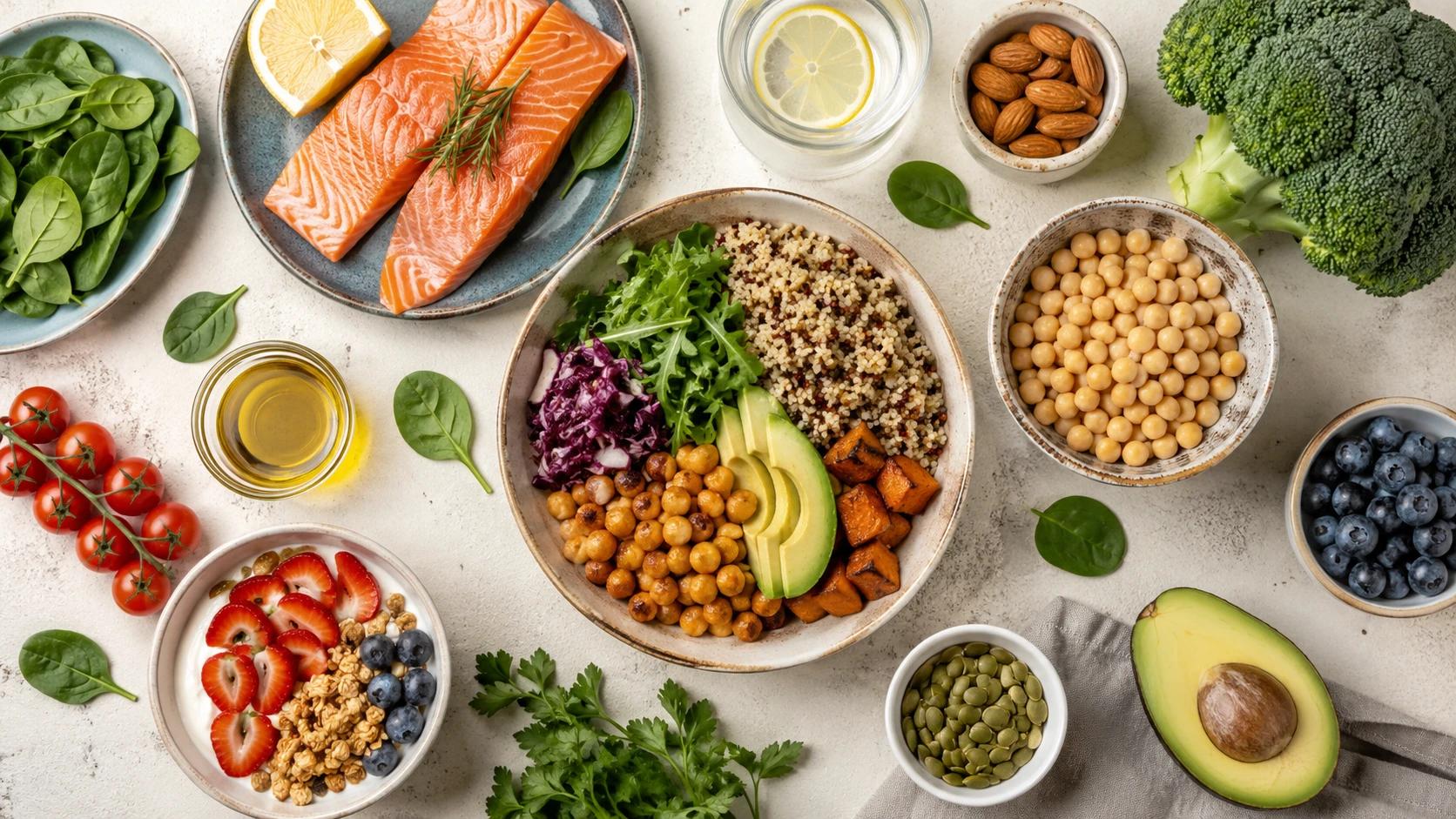
Dietary fibre is the primary food source for beneficial gut bacteria — they ferment it to produce short-chain fatty acids that nourish the gut lining, reduce inflammation, and support immune function. Most Indians consume far less fibre than the recommended 25–38 grams per day, despite a traditionally plant-rich cuisine. Prioritising whole grains over refined ones, eating generous portions of vegetables at every meal, including legumes like dal, rajma, and chana daily, and snacking on fruits and nuts rather than processed foods consistently increases the fibre that feeds a healthy microbiome.
Introduce fermented foods
Fermented foods contain live beneficial bacteria — probiotics — that directly contribute to gut microbiome diversity. The Indian diet has a long tradition of fermented foods that have been quietly supporting gut health for centuries. Curd (dahi) eaten daily is one of the most accessible and effective probiotic foods available. Chaas — diluted, churned curd — delivers similar benefits in a lighter, more digestible form. Idli and dosa made from traditionally fermented batter, kanji during winter months, and homemade achaar all contribute beneficial microorganisms. Eating at least one fermented food daily is one of the simplest and most evidence-supported steps in improving gut health.
Diversify your diet deliberately
Gut microbiome research consistently shows that dietary diversity is one of the strongest predictors of microbiome diversity — and microbiome diversity is strongly associated with good gut health and overall resilience. Eating a wide variety of plant foods across the week — targeting thirty or more different plant foods weekly across vegetables, fruits, whole grains, legumes, nuts, seeds, and herbs — significantly improves the range of beneficial bacteria that your gut supports. This doesn't require exotic ingredients — rotating between different dals, trying different seasonal vegetables, adding seeds to meals, and varying your fruit choices across the week achieves meaningful diversity within an entirely conventional Indian diet.
Reduce ultra-processed foods
Ultra-processed foods — packaged snacks, instant noodles, sugary cereals, soft drinks, commercially produced baked goods — are among the most damaging dietary patterns for gut health. They are typically low in fibre, high in sugar and refined carbohydrates, and often contain emulsifiers and artificial additives that research suggests directly disrupt the gut microbiome and damage the gut lining. Reducing ultra-processed food consumption — even partially — produces measurable improvements in gut microbiome composition within weeks.
-13c4212e-778f-453c-9be4-72c7d9bd7907.png&w=3840&q=75)
Sleep — the underestimated gut health factor
The gut microbiome follows a circadian rhythm — its composition and activity change across the day in sync with the body's sleep-wake cycle. Poor sleep disrupts this rhythm, reduces microbiome diversity, and increases gut permeability. Research shows that even two nights of poor sleep produce measurable changes in gut bacteria composition. Prioritising seven to nine hours of consistent, quality sleep is therefore a direct gut health intervention, not merely a general wellness recommendation.
Stress and the gut-brain connection
Chronic stress is one of the most potent disruptors of gut health available. It alters gut motility, reduces beneficial bacteria populations, increases gut permeability, and amplifies the perception of gut pain and discomfort. The relationship is bidirectional — gut dysbiosis also increases stress and anxiety responses through the gut-brain axis. Stress management practices including regular exercise, meditation, adequate rest, and meaningful social connection are all, in effect, gut health interventions.
Antibiotic awareness
Antibiotics are sometimes essential and life-saving — but they are also among the most powerful disruptors of the gut microbiome, eliminating beneficial bacteria alongside the harmful ones they target. The microbiome can take months to recover from a course of antibiotics, and repeated courses compound the disruption. Avoiding unnecessary antibiotic use, never self-medicating with antibiotics, and actively supporting microbiome recovery through probiotic-rich foods and a high-fibre diet following any necessary antibiotic course are all important protective practices.
Hydration
Adequate water intake supports the mucus layer that lines the gut — a critical protective barrier for the gut lining and a habitat for beneficial bacteria. Dehydration thickens stool, slows transit time, and creates an environment less hospitable to beneficial microorganisms. Eight to ten glasses of water daily is the baseline — more during hot Indian summers and periods of high physical activity.
-95d4a412-2e2e-44f2-a049-fbad227a7131.png&w=3840&q=75)
Certain foods stand out for their specific contribution to gut health beyond general nutrition. Garlic and onion contain prebiotic fibres — food for beneficial bacteria — that support microbiome diversity even in small daily quantities. Ginger actively supports digestive motility and reduces gut inflammation. Banana — particularly slightly underripe banana — contains resistant starch that feeds beneficial bacteria. Turmeric's active compound curcumin has direct anti-inflammatory effects on the gut lining. Whole oats contain beta-glucan — a soluble fibre with particularly strong prebiotic properties. Amla is extraordinarily rich in antioxidants that reduce oxidative stress in the gut.
These are not exotic or expensive ingredients. They are the staples of traditional Indian cooking — and their consistent presence in the daily diet is a significant part of why a traditional Indian diet, before the incursion of ultra-processed foods, was so supportive of gut health.
Gut health responds to dietary and lifestyle changes faster than many people expect. Research shows measurable changes in gut microbiome composition within three to four days of dietary change — though these early changes are not yet stable. Meaningful, sustainable improvement in microbiome diversity and composition typically occurs over four to eight weeks of consistent change. Symptom improvement — reduced bloating, more regular digestion, improved energy — is often noticeable within two to four weeks. Deeper improvements in immunity, mood, and skin health typically become apparent over three to six months of sustained dietary and lifestyle change.
Should I take a probiotic supplement to improve gut health? Probiotic supplements can be beneficial — particularly following antibiotic use or for specific diagnosed conditions. However, for most people eating a varied diet that includes fermented foods, the evidence for additional probiotic supplementation is less clear. Food-based probiotics from curd, chaas, and fermented foods are well-established; targeted supplementation is best discussed with a doctor or registered dietitian based on your specific situation.
Is it possible to improve gut health without giving up foods I love? Absolutely. Gut health improvement is about addition as much as subtraction — adding more fibre, more fermented foods, more dietary diversity, and more water produces significant benefits even without eliminating beloved foods. Reducing ultra-processed foods and excess sugar makes the most meaningful difference on the subtraction side; you don't need to overhaul your entire diet to see results.
How do I know if my gut health has improved? The most immediate indicators are digestive — less bloating, more regular and comfortable bowel movements, reduced gas and abdominal discomfort. Energy levels typically improve as nutrient absorption becomes more efficient. Skin clarity often improves. Mood stability can improve through the gut-brain axis. These subjective improvements, sustained consistently, are reliable indicators of meaningful gut health progress.
