How to Get Rid of Age Spots: Expert Guide


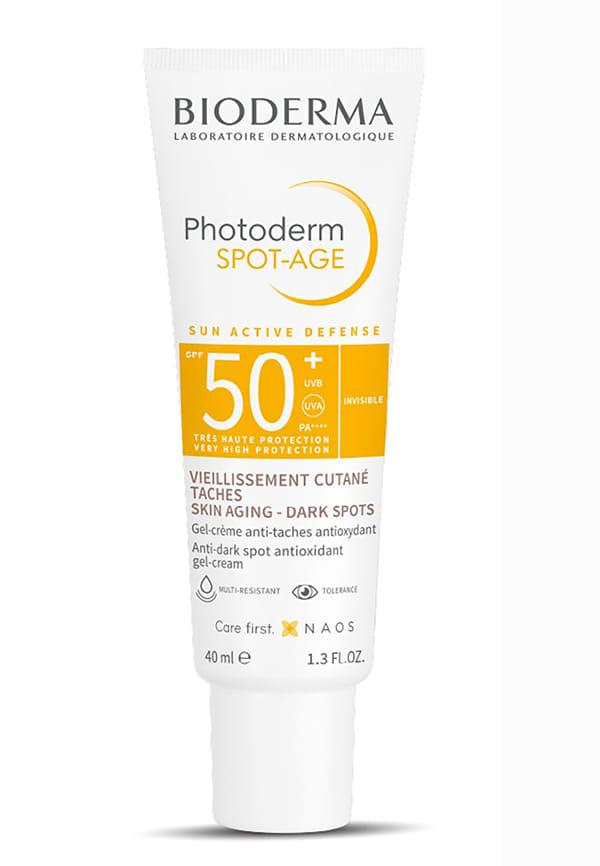 40 ml
40 mlPhotoderm Spot Age SPF 50+ Reduces Spots And Wrinkles Antioxidant Boosted Suncare
Those pesky brown spots that seem to pop up out of nowhere? Yeah, we're talking about age spots – those flat, dark patches that love to make themselves at home on your hands, face, and shoulders. Real talk: they're not actually about age (though they do become more common as we get older), they're all about sun damage that's finally catching up with you. The good news? There are loads of ways to fade these spots and get your skin looking more even. From professional treatments that work fast to gentle at-home solutions you can try without breaking the bank, let's dive into everything you need to know about how to get rid of age spots for good.
Let's start with the basics – age spot causes aren't as mysterious as they might seem. These flat, brown or black spots are basically your skin's way of saying "remember all that sun exposure from years ago?" They're caused by an overproduction of melanin, the pigment that gives your skin its colour. When UV rays hit your skin repeatedly over time, certain areas start producing extra melanin as a protective response, creating those concentrated dark patches we call age spots.
Not all dark spots are created equal, and knowing the difference can help you choose the right treatment. Age spots (also called sun spots or liver spots) are flat, well-defined brown patches that typically appear on sun-exposed areas. They're different from melasma, which creates larger, more irregular patches often triggered by hormonal changes, and post-inflammatory hyperpigmentation, which develops after skin injury or acne.
Here's what's happening under your skin: UV exposure triggers melanocytes (pigment-producing cells) to go into overdrive. Over years of sun exposure, some of these cells become damaged and start producing melanin continuously, even without UV stimulation. This is why age spots often appear on your hands, face, shoulders, and arms – the areas that get the most sun throughout your life.
When you want results that are worth obsessing over, professional treatments are your best bet. These methods target melanin directly and can significantly fade or completely remove age spots in just a few sessions.
Laser treatments and Intense Pulsed Light (IPL) are like precision tools for sun spots treatment. They work by targeting the melanin in age spots with specific wavelengths of light, breaking up the pigment so your body can naturally eliminate it. Most people see significant fading after 2-3 sessions, with results becoming more obvious over the following weeks as your skin heals.
Chemical peels are brilliant hyperpigmentation solutions that work by removing the top layers of skin where the excess pigment lives. Glycolic acid peels are gentler and great for maintenance, while TCA (trichloroacetic acid) peels go deeper for more stubborn spots. The recovery time varies – lighter peels might just leave you a bit pink for a day or two, while deeper peels can take a week or more to heal completely.
Cryotherapy uses liquid nitrogen to freeze age spots, causing the pigmented skin to peel off over the following days. It's quick but can be a bit uncomfortable and might leave temporary lightening of the surrounding skin. Microdermabrasion is gentler, using tiny crystals to buff away the top layer of skin gradually. It's less dramatic but also less risky for most skin types.
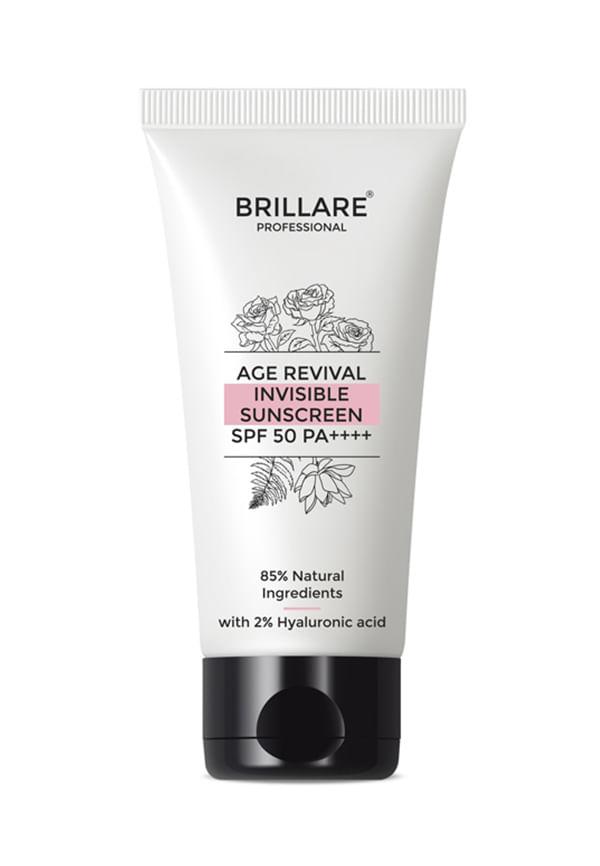 50ml
50mlAge Revival INVISIBLE Sunscreen
Not ready for professional treatments? No worries – there are loads of effective creams and serums that can help fade age spots over time. The key is consistency and patience, as topical treatments work more gradually than professional procedures.
Hydroquinone is considered the gold standard for melanin reduction. It works by inhibiting the enzyme that produces melanin, gradually lightening dark spots over 3-6 months. Tretinoin (a prescription retinoid) speeds up cell turnover, helping to shed pigmented skin cells faster. Some dermatologists prescribe combination creams that include both ingredients plus a mild steroid to reduce irritation.
If you're looking for gentler options, vitamin C serums are brilliant for both treating existing spots and preventing new ones. They work as antioxidants whilst gradually lightening pigmentation. Kojic acid and arbutin are natural alternatives to hydroquinone that work more slowly but with less risk of irritation. Niacinamide is another superstar ingredient that helps achieve an even skin tone whilst being suitable for sensitive skin.
Natural remedies won't work as quickly as professional treatments or prescription creams, but they can be worth a try if you prefer gentler approaches or want to complement other treatments.
Lemon juice contains natural citric acid that can help exfoliate and lighten skin over time, though it can also make your skin more sensitive to sun. Aloe vera has anti-inflammatory properties and may help with gentle lightening. Apple cider vinegar contains mild acids that can help with exfoliation, but always dilute it before applying to avoid irritation.
Gentle exfoliation can help fade age spots by encouraging cell turnover. Alpha hydroxy acids (AHAs) like glycolic acid and beta hydroxy acids (BHAs) like salicylic acid are available in over-the-counter products. Start slowly – maybe twice a week – and build up as your skin gets used to it. Physical exfoliation with gentle scrubs can also help, but don't overdo it as this can cause irritation and potentially worsen pigmentation.
Different areas of your body might need slightly different approaches when it comes to skin discolouration correction. Your hands and face have different skin thickness and sensitivity levels, so what works brilliantly on one area might need adjusting for another.
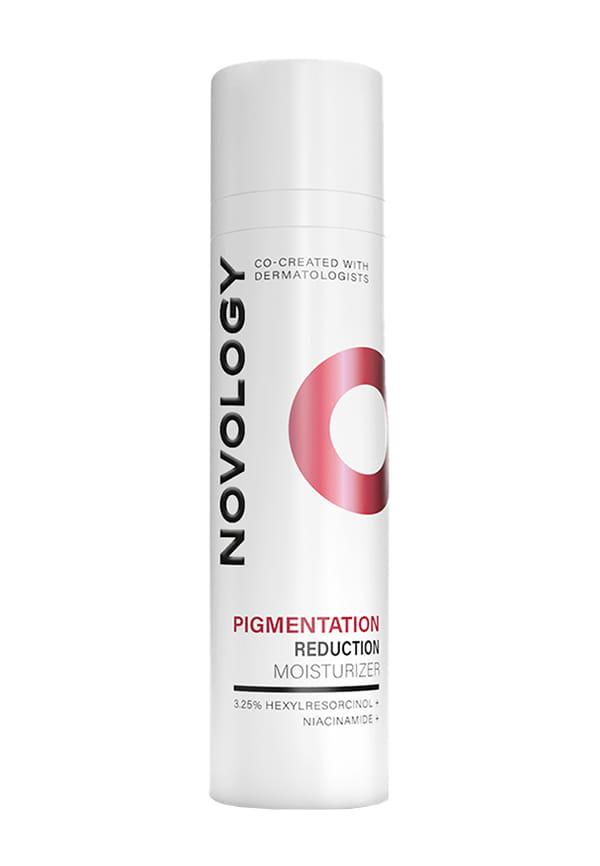 50 g
50 gPigmentation Moisturiser, Face Cream for Hyperpigmentation & Dark Spots
Hands often show age spots first because they get so much sun exposure throughout our lives. The skin on your hands is also thicker than facial skin, so it can often handle stronger treatments. Look for hand creams specifically formulated with lightening ingredients, and don't forget to apply sunscreen to your hands daily – it's one of the most overlooked areas for sun protection.
Facial skin is more delicate, so start with gentler treatments and build up gradually. If you're already using anti-aging products with retinoids or acids, introduce new dark spot corrector products slowly to avoid overwhelming your skin. A good approach is to use lightening treatments at night and always follow up with sunscreen during the day.
The best treatment for age spots? Not getting them in the first place. Prevention is honestly so much easier (and cheaper) than treatment, and it's never too late to start protecting your skin from further damage.
This is non-negotiable – SPF 30 or higher, every single day, even when it's cloudy. UV rays can penetrate clouds and windows, so make sunscreen part of your morning routine like brushing your teeth. Reapply every two hours if you're spending time outdoors, and don't forget often-missed spots like your ears, neck, and the backs of your hands.
Wide-brimmed hats, UV-protective clothing, and seeking shade during peak sun hours (10am-4pm) can make a huge difference. An antioxidant-rich diet with plenty of vitamins C and E can also help protect your skin from the inside out. Think berries, leafy greens, and nuts – basically, foods that are good for you anyway.
Managing expectations is crucial when treating age spots. Different methods work at different speeds, and understanding realistic timelines can help you stick with your chosen treatment long enough to see results.
Professional laser treatments typically show results within 4-8 weeks, with continued improvement over several months. Prescription topical treatments usually take 8-12 weeks for noticeable fading, whilst over-the-counter products might take 3-6 months of consistent use. Natural remedies are the slowest, often requiring 6-12 months for mild improvement.
If any spot changes in size, colour, or texture, gets a dermatologist to check it out immediately. Also, if you've been consistently using treatments for several months without seeing any improvement, a professional can help customise a more effective approach for your specific skin type and concerns.
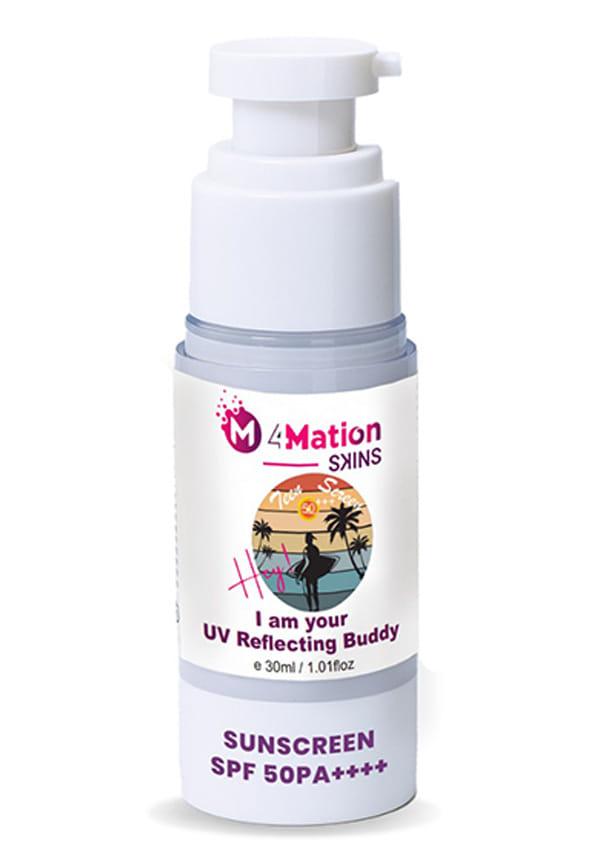 30ml
30mlTeenager Sunscreen
When you're ready to try new skincare products for treating age spots, Smytten makes it easy to discover what works for your skin without the commitment of full-size purchases. With trial packs from trusted brands like Cetaphil and Dot & Key, you can test different dark spot corrector formulations to find your perfect match. Getting up to 8 minis for just ₹249 means you can experiment with various treatments and find the ones that deliver the results you're after.
The fastest at-home method combines daily vitamin C serum, gentle exfoliation 2-3 times weekly with AHA or BHA products, and consistent sunscreen use. Results typically appear in 6-8 weeks with this combination approach.
Yes, professional treatments like laser therapy and chemical peels can significantly fade or completely remove age spots, whilst topical treatments can lighten them substantially over time. The key is choosing the right treatment for your skin type and being consistent.
Professional treatments show results in 4-8 weeks, prescription topicals in 8-12 weeks, and over-the-counter products in 3-6 months with consistent use. Natural remedies typically take the longest at 6-12 months.
Most age spots are harmless, but any spot that changes in size, colour, or texture should be evaluated by a dermatologist immediately to rule out skin cancer. It's always better to be safe and get unusual spots checked.
Age spots and sun spots are actually the same condition – flat, brown spots caused by UV damage. The term "age spots" refers to their common appearance as we get older, but they're really about cumulative sun exposure rather than age itself.
Getting rid of age spots is totally doable with the right approach and realistic expectations. Whether you choose professional treatments for faster results or prefer to start with gentler at-home options, consistency is your best friend. Remember that prevention is just as important as treatment – protecting your skin from further sun damage will help maintain your results and prevent new spots from forming.
The journey to clearer, more even skin doesn't have to be overwhelming or expensive. Start with what feels right for your skin and budget, and don't be afraid to adjust your approach as you learn what works best. With patience and the right products, you can definitely achieve the even skin tone you're after. After all, why settle for maybe when you can try different solutions and find what actually works for your unique skin?
