How to Use the Best Anti Frizz Serum for Smooth Hair


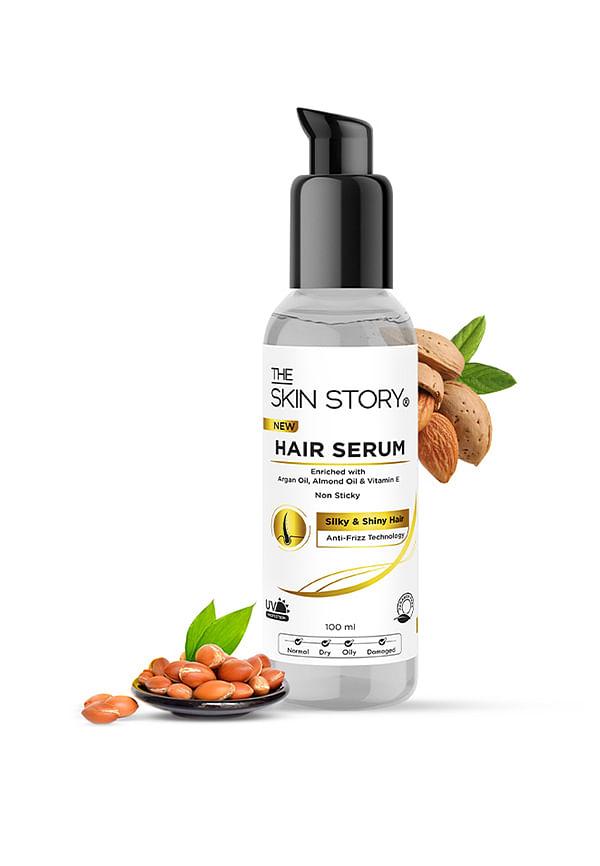 100 ml
Hair Serum With Anti Frizz Technology And UV Protection, Non-Sticky For Silky Hair
Frizzy hair can feel like a daily battle, especially when humidity hits or your hair just refuses to cooperate. Finding the best anti frizz serum isn't just about grabbing the first bottle you see—it's about understanding what your hair actually needs and how to use it properly. Whether you're dealing with stubborn flyaways, humidity-induced chaos, or just want that sleek, smooth finish, the right serum can be a total game-changer. Let's dive into everything you need to know about choosing and using anti-frizz serums that actually work.
Real talk—not all serums are created equal. The best anti frizz serum works by creating a protective barrier around your hair shaft, sealing the cuticle and preventing moisture from getting in and causing that dreaded puff. Think of it like a raincoat for your hair.
The science is pretty straightforward: frizz happens when your hair cuticles lift and let moisture in. A good frizz control serum contains ingredients like silicones, natural oils, or proteins that smooth down those cuticles and lock in your hair's natural moisture while keeping external humidity out.
Key ingredients to look for include dimethicone (a lightweight silicone that doesn't weigh hair down), argan oil (for deep nourishment), and keratin proteins (for long-term smoothing). These work together to give you that glossy, frizz-free finish that lasts all day.
Your hair type determines which hair smoothing serum will work best for you. What works for your mate with fine hair might leave your thick, curly locks feeling weighed down or under-moisturised.
If you've got fine hair, you need a serum for frizzy hair that smooths without the weight. Look for water-based formulas or those with cyclomethicone—they'll tame frizz without making your hair look flat or greasy.
Thick hair can handle richer formulas. Argan oil-based serums or those with multiple silicones work brilliantly for creating that smooth, controlled look you're after.
Got curls? You need an anti-frizz treatment that defines rather than straightens. Look for serums with natural oils and avoid anything too heavy in silicones, which can build up on curly hair.
If you're always reaching for your straightener or blow dryer, choose a hair serum for humidity that doubles as heat protection. These usually contain ingredients that shield your hair from temperatures up to 230°C.
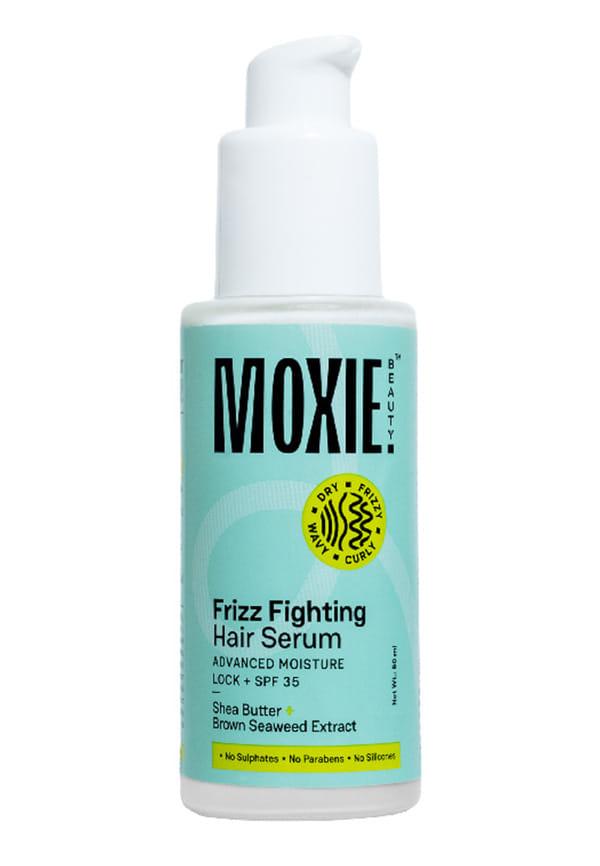 50ml
50mlFrizz Fighting Hair Serum For Dry and Frizzy Hair
Picking the right best hair serum isn't about following trends—it's about understanding what your specific hair type needs. Here's how to nail it every time.
Fine hair needs lightweight, non-greasy formulas that won't weigh it down. Medium-textured hair can handle most serums, whilst thick or coarse hair benefits from richer, more nourishing formulas.
If you air-dry your hair, look for a hair product for frizz that works without heat. If you're always styling with hot tools, prioritise serums with thermal protection.
Living somewhere humid? You need a serum specifically designed to block moisture. Dry climate? Focus on hydrating formulas that prevent frizz from dryness.
Even the best serum won't work if you're not applying it correctly. Here's how to get salon-worthy results at home with your smooth hair serum.
Always apply serum to freshly washed, towel-dried hair. Your hair should be damp, not soaking wet—excess water will dilute the serum and reduce its effectiveness.
This is where most people go wrong. For shoulder-length hair, you need about half a pump to one pump of serum. Too much will leave your hair looking greasy, too little won't control the frizz.
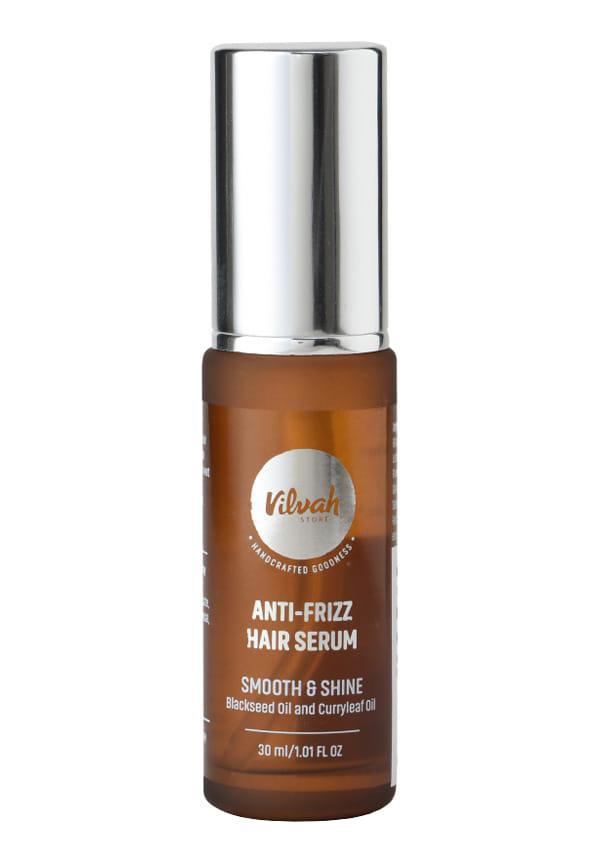 30 ml
30 mlAnti-Frizz Hair Serum
Never apply serum to your roots—it'll make your hair look oily. Start from the mid-lengths and work down to the ends, where frizz is usually worst.
Use a wide-tooth comb or your fingers to distribute the frizz fighting serum evenly through your hair. This ensures every strand gets protection.
Whether you're air-drying or using heat tools, the serum will work its magic. For best results with heat styling, use a round brush whilst blow-drying to smooth the cuticles further.
Even with the right hair care serum, these common slip-ups can leave you with less-than-perfect results. Avoid these pitfalls for consistently smooth hair.
Using too much product is the biggest mistake. More isn't better when it comes to serums—it just leads to greasy, weighed-down hair that still frizzes at the roots.
Applying to wet hair dilutes the serum's effectiveness. Your hair should be damp, not dripping. Gently squeeze out excess water with a microfibre towel before applying.
Choosing the wrong formula for your hair type will leave you frustrated. Fine hair needs lightweight formulas, whilst thick hair can handle richer textures.
Skipping heat protection when you need it. If you're using hot tools, make sure your serum includes thermal protection, or layer a separate heat protectant underneath.
Not being consistent with application. Anti-frizz serums work best when used regularly, not just on bad hair days.
The beauty of finding your ideal anti-frizz serum lies in being able to try different formulas without committing to full-size bottles. Smytten, India's largest product discovery platform, makes this exploration incredibly easy and affordable. With curated trial packs from over 1,500 trusted brands, you can test various frizz control serums to find what works best for your hair type.
The platform offers mini-sized products from top haircare brands, letting you experience different formulas before making a full-size purchase. You can get up to 8 minis for just ₹249, plus enjoy 100% cashback on these trial purchases, redeemable for future orders. This means you can try multiple anti-frizz treatments without the financial commitment, making it easier to discover your perfect hair smoothing solution.
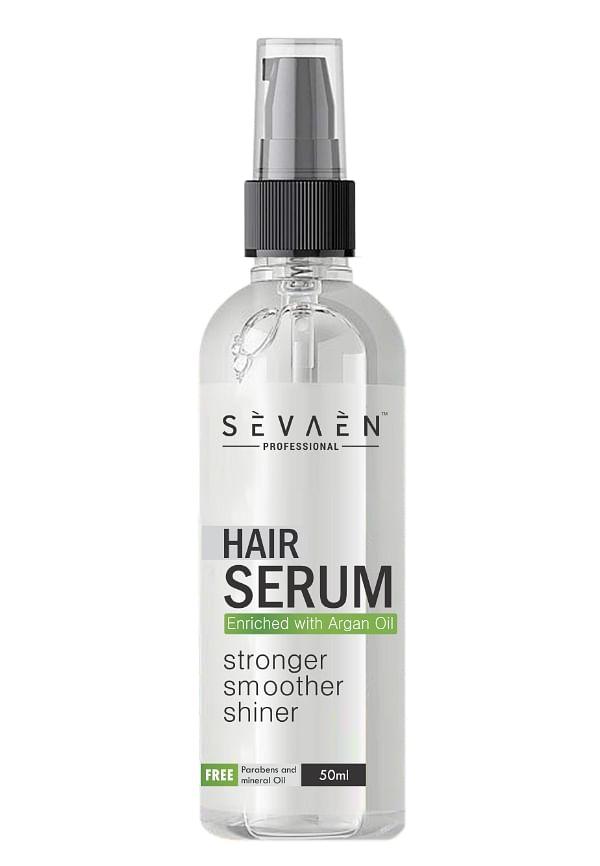 50 ml
50 mlHair Serum For Silky & Smooth Hair, Tames Frizzy Hair
You can use anti-frizz serum every time you wash your hair, which is typically 2-3 times per week for most people. If you wash daily, daily use is fine—just adjust the amount based on how your hair responds.
Whilst serums work best on damp hair, you can apply a tiny amount to dry hair for touch-ups. Focus on the ends and any particularly frizzy areas, but use sparingly to avoid greasiness.
Hair oils are typically heavier and more nourishing, whilst serums are lighter and designed for styling. Serums often contain silicones for instant smoothing, whereas oils focus on long-term hair health and moisture.
Yes, but you need a serum specifically formulated for humidity protection. Look for ingredients like dimethicone or cyclomethicone, which create an effective barrier against moisture in the air.
Quality serums shouldn't damage your hair when used correctly. However, overuse or choosing the wrong formula for your hair type can lead to buildup or greasiness. Always follow the recommended amount and choose products suited to your hair's needs.
You should see immediate smoothing effects after the first application. For long-term improvements in hair texture and manageability, consistent use over 2-4 weeks typically shows the best results.
Finding the best anti frizz serum for your hair is all about understanding your specific needs and applying it correctly. Whether you're dealing with humidity-induced frizz, natural texture, or damage-related issues, there's a serum out there that can transform your hair routine.
Remember, the key to success lies in choosing the right formula for your hair type, applying the correct amount, and being consistent with your routine. Don't be afraid to experiment with different products until you find your perfect match—after all, what works for someone else might not work for you, and that's completely normal.
With platforms like Smytten making it easier than ever to try new products without the commitment, discovering your ideal frizz-fighting formula has never been more accessible. Why settle for maybe when you can try different options and find the one that truly works for your hair?
