How to Determine Your Hair Porosity in 3 Steps

 108 gm
Salon Secret High Shine Crème Hair Colour
Ever wondered why some products work magic on your friend's hair but leave yours looking meh? The secret might be hiding in your hair's porosity. Think of it as your hair's ability to drink up moisture—some strands are like sponges, others are more like raincoats. Getting to know your hair porosity is like having the cheat code for your perfect haircare routine. Once you crack this, you'll know exactly which products to try and which ones to skip. Ready to become your own hair detective? Let's dive into the best hair porosity test methods that'll give you all the answers you need.
Let's break it down in simple terms. Hair porosity is basically how easily your hair can absorb and hold onto moisture. It all comes down to your hair's cuticle layer—those tiny overlapping scales that protect each strand. Think of them like roof tiles on your hair. When these cuticles are tightly packed, moisture has a tough time getting in (and out). When they're more open or damaged, moisture flows in and out pretty easily. This whole hair structure situation affects everything—how your hair feels, how it responds to products, and even how long your styles last. Here's why this matters for your daily routine: • Product absorption varies wildly based on porosity • Styling time and results depend on how your hair holds moisture • The wrong products for your porosity type can leave hair greasy or dry • Understanding porosity helps you pick treatments that actually work Real talk—once you know your hair's porosity, you'll stop wasting money on products that just don't vibe with your strands.
Not all hair is created equal, and that's where hair porosity types come into play. There are three main categories, and each one has its own personality.
Low porosity hair is like that friend who takes forever to warm up to new people. The cuticles are tightly sealed, making it tricky for moisture to get in. Your hair might take ages to get wet in the shower and even longer to dry. Products tend to sit on top rather than soaking in, which can leave your hair feeling weighed down. Signs you might have low porosity hair: • Water beads up on your hair instead of soaking in • Products build up easily • Hair takes forever to dry • Resistant to chemical treatments
Medium porosity hair is basically the Goldilocks of hair types—not too tight, not too open, but just right. The cuticles are slightly raised, allowing the perfect amount of moisture in and out. This hair type typically looks healthy, holds styles well, and responds nicely to most products.
 131 gm
Salon Secret High Shine Conditioning Hair Colour
High porosity hair is the social butterfly—it absorbs everything quickly but struggles to hold onto moisture. The cuticles are more open, often due to damage from heat, chemicals, or environmental factors. While it drinks up products fast, it also loses moisture just as quickly. Characteristics of high porosity hair: • Gets wet quickly but also dries fast • Feels rough or bumpy to touch • Prone to frizz and tangles • Colour fades quickly
This is hands down the best hair porosity test you can do at home. It's simple, reliable, and gives you clear results. Here's how to nail it every time. What you'll need: • A clear glass of room temperature water • A few strands of clean hair (grab them from your brush) • About 5 minutes of patience Here's the step-by-step process: 1. Make sure your hair is completely clean and product-free 2. Gently place 2-3 strands on the water surface 3. Wait and watch what happens over the next few minutes 4. Note where your hair ends up Reading your results: • Floats on top: Low porosity—those cuticles are sealed tight • Sinks slowly to middle: Medium porosity—balanced absorption • Sinks straight to bottom: High porosity—very absorbent Pro tip: Use hair from different areas of your head since porosity can vary. The ends are often more porous than the roots due to age and damage.
This porosity test is all about feeling your way to the truth. It's particularly good at revealing the condition of your cuticles and confirming what you learned from the float test. Here's how to do it properly: 1. Take a single strand of clean, dry hair 2. Hold one end firmly between your fingers 3. Slide your fingers up the strand from tip to root 4. Pay attention to how it feels What the texture tells you: • Smooth sailing: Low porosity—cuticles are lying flat • Slightly bumpy: Medium porosity—some texture but not rough • Rough and bumpy: High porosity—damaged or lifted cuticles This test works because you're literally feeling the hair structure. When cuticles are damaged or lifted, they create that rough, bumpy sensation. Healthy, low porosity hair feels smooth because those cuticles are lying flat and sealed.
Want to test hair porosity at home with something you probably already have? The spray bottle test is your friend. It's super quick and gives you instant visual feedback. What you'll need: • A spray bottle filled with water • Clean, dry hair • Good lighting to see the results The process: 1. Section off a small piece of clean hair 2. Spray a fine mist of water onto the section 3. Watch how the water behaves immediately 4. Note what happens over the next minute Interpreting the results: • Water beads up and rolls off: Low porosity • Water absorbs slowly and evenly: Medium porosity • Water soaks in immediately: High porosity This test is brilliant for confirming your other results. If all three tests point to the same porosity type, you can be confident in your assessment.
Sometimes you want answers fast, and that's where a hair porosity quiz comes in handy. While it's not as accurate as physical testing, it can give you a good starting point. Answer these questions honestly: 1. How long does your hair take to air dry? • Hours and hours (Low) • 2-3 hours (Medium) • Less than 2 hours (High) 2. How does your hair feel after washing? • Takes forever to feel wet (Low) • Gets wet easily (Medium) • Soaks up water immediately (High) 3. How do hair products typically behave on your strands? • Sit on top, hard to absorb (Low) • Absorb well with good results (Medium) • Absorb quickly but effects don't last (High) 4. How does your hair respond to humidity? • Barely affected (Low) • Some frizz but manageable (Medium) • Turns into a frizz ball (High) Count up your answers to get a general idea of your porosity type. Remember, this quiz works best alongside the physical tests for the most accurate picture.
 1 unit
Round Hair Brushfor Adding Curls, Volume & Waves In Hairs| Men and Women| All Hair Types, Color May Vary (R2-RB)
Want to test hair porosity at home like a pro? Preparation is everything. Skipping these steps can throw off your results completely.
This is non-negotiable. Product buildup, oils, and styling residue can mask your hair's true porosity. Use a clarifying shampoo to strip away everything that might interfere with your tests.
Your roots and ends might tell different stories. The ends of your hair are older and have been through more damage, so they're often more porous than your roots. Test different sections to get the full picture.
Humidity, temperature, and even the hardness of your water can affect test results. Try to test in consistent conditions for the most reliable results. These haircare tips might seem basic, but they make all the difference between accurate results and confusing ones.
Medium porosity is generally considered ideal because it strikes the perfect balance. Your hair can absorb moisture when needed but also holds onto it well. It's typically healthier and more manageable than high porosity hair, while being more flexible than low porosity hair.
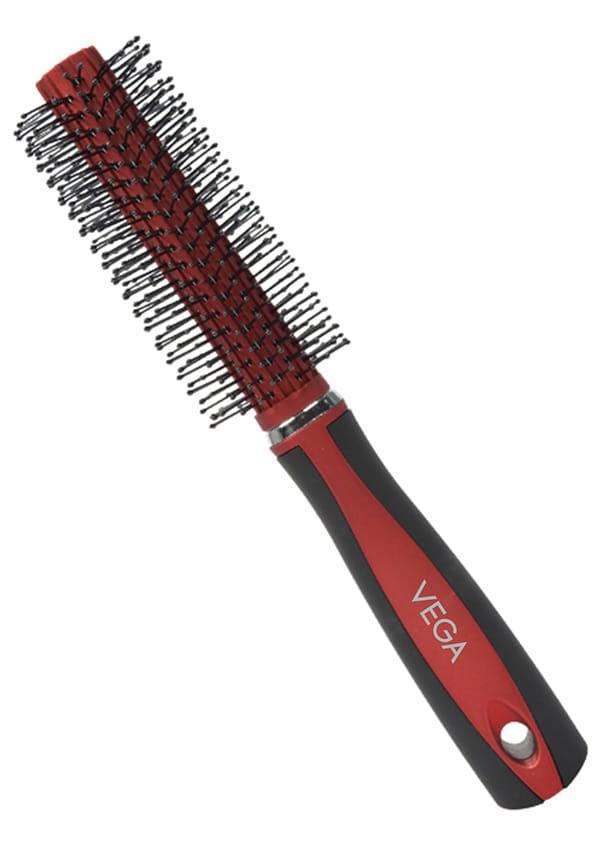 1 unit
Round Hair Brushfor Adding Curls, Volume & Waves In Hairs| Men and Women| All Hair Types (E3-RB)
The most reliable method is combining the float test, slip and slide test, and spray bottle test. Use clean, product-free hair for all tests and compare results across different sections of your hair for the most accurate assessment.
Not necessarily. Hair texture and porosity are different things. While 4C hair can be more prone to damage that increases porosity, many people with 4C hair actually have low porosity. The tight curl pattern can make it seem like high porosity, but testing is the only way to know for sure.
Absolutely. Heat styling, chemical treatments, environmental damage, and even ageing can increase your hair's porosity over time. That's why it's worth retesting every few months, especially if you notice changes in how your hair behaves.
Test whenever you notice significant changes in how your hair responds to products or styling. Major life changes, new treatments, or seasonal shifts might warrant a retest. Generally, checking every 3-6 months is plenty.
Knowing your hair porosity is like having a secret weapon in your haircare arsenal. The best hair porosity test combines multiple methods—the float test, slip and slide test, and spray bottle test—to give you the most accurate picture. Once you know whether you have low, medium, or high porosity hair, you can make smarter choices about products and treatments. This is where platforms like Smytten become your best friend. As India's largest product discovery and trial platform, Smytten lets you explore haircare products from over 1,500 trusted brands without the commitment of full-size purchases. With curated trial packs available for just ₹249, you can test different products based on your newly discovered porosity type. The platform offers 100% cashback on trial purchases, making it risk-free to find your perfect haircare match. Whether you need lightweight products for low porosity hair or intensive treatments for high porosity strands, Smytten's extensive range ensures you'll find something that works. After all, why settle for 'maybe' when you can try it all and find what truly works for your unique hair needs?
